Key Takeaways
- Recruitment automation is the use of technology to automate repetitive tasks throughout the recruitment process such as job postings, resume screening, interview scheduling and communication.
- Recruitment automation software can be used by hiring teams to help manage candidate applications, track candidates and manage recruitment activities.
- When the recruitment process is automated, it will reduce administrative tasks, minimize delays, and improve the business hiring process.
- Automated hiring processes help to improve communication with candidates. This ensures that recruiters can focus on evaluating candidates and helps to coordinate with hiring teams.
- Businesses should use the right tools, maintain human involvement, protect candidate data, and regularly monitor their recruitment processes.
Introduction
Managing multiple tasks is common in a recruiter’s day-to-day work. Going through hundreds of resumes, posting job openings, organizing interviews, contacting the applicants and then waiting for the feedback from the recruiting manager is a time-consuming process if they want to recruit a number of individuals.
Recruitment automation is the process of automating some repetitive tasks using technology helps to manage candidate data, improving communication and reducing manual work. Thus, it would save time for HR teams so that they can concentrate on evaluating candidates instead. Recruitment automation may assist in managing various recruitment processes.
For example, when someone applies for a specific position, the software will automatically keep their application in the system, sort out their CV, and ensure that the individual has applied. In this case, the recruiting firm will not do everything manually.
This blog discusses recruitment automation, its significance and ways to automate their recruitment process.
What Is Recruitment Automation?
Recruitment automation process improves efficiency and decreases the time taken for repetitive processes involved in recruiting people. It may assist recruiters in automating processes such as advertising positions, collecting applications, organising resumes, scheduling interviews and contacting candidates.
Automation helps save time in performing repetitive tasks in the recruiting process. This increases the efficiency of the recruiting process by automating your routine activities such as job postings, collecting applications, reviewing CVs, and scheduling interviews. This enables your recruiters to focus on evaluating candidates.
It does not mean that there will be no need for recruiters anymore. The purpose of recruitment automation is to decrease the manual effort. The candidates will still be assessed by recruiters, who will conduct interviews and make a decision regarding employment.
Why Is Recruitment Automation Important?
Recruiting manually may be time-consuming and could be difficult to manage if they have many applications. Recruitment automation will assist them in dealing with these challenges:
- Time-Saving: Automate repetitive tasks such as sending confirmation emails, updating candidate status and setting up interviews. This allows recruiters to spend less time on administrative work.
- Improved Candidate Experience: Recruiters will be able to keep candidates updated.
- Reduces Human Error: Everything is kept to a standard therefore reducing any errors which may be made when adding repetitive information.
- Visibility Improvement: Recruiters will be able to see what stage of the process each application is at and whether there are any delays.
- Collaboration Improvement: With all information regarding the candidates and interviews in one place, it will make it easier for recruiters to supply this information to provide managers.
How to Implement Recruitment Automation: A Step-by-Step Guide
The process of recruitment automation starts by knowing what you want to automate. After identifying the areas that require more time, you can get some appropriate software and begin automating everything step by step. Below is a list of actions that will help you automate the recruitment process:
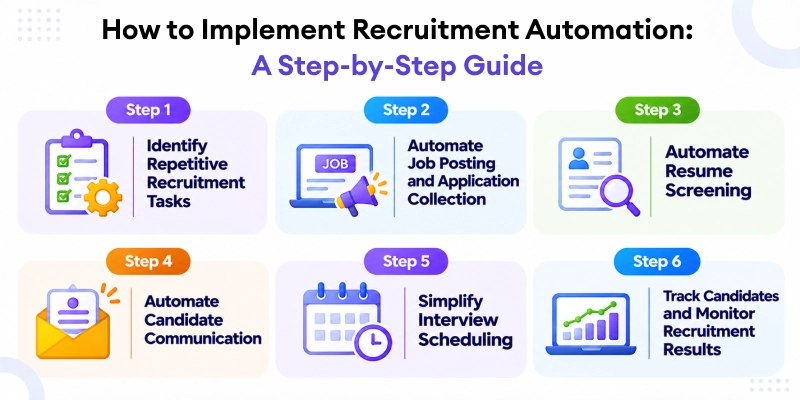
Step 1: Identify Repetitive Recruitment Tasks
Identify time consuming areas of your recruitment process such as advertising vacancies, CV screening, keeping candidates up to date, interview scheduling and candidate tracking.
Businesses may also ask for input from your recruiters and see which tasks require more administration. You can identify which tasks will need recruitment process automation and know where you should focus your efforts.
Step 2: Automate Job Posting and Application Collection
Using automated tools for designing and posting vacancies on the company career pages and supported job boards could simplify the recruitment process.
They can provide the possibility of collecting and storing applications on one website, thus saving time which is spent on collecting applications from multiple websites. Also, using application forms could guarantee consistent data on candidates.
Step 3: Automate Resume Screening
Checking through hundreds of CVs is a very lengthy process therefore, recruitment automation software would assist you in managing your process by organizing your CVs, extracting important information, and shortlisting candidates using certain parameters like skills, qualifications, and experience.
Some of the platforms would offer an AI-powered candidate matching solution, which identifies the candidates that are most suitable for the job role. At times, the shortlisting might not occur due to the absence of specific keywords in the CVs. Therefore, it becomes necessary that the shortlisted CVs be checked by the recruiter, while the criteria used for screening must be checked.
Step 4: Automate Candidate Communication
If you keep your candidates updated, it is likely that you will provide them with a better candidate experience. Failure to respond quickly enough may result in not updating them timely and losing their interest in the position being offered.
The use of automated emails may also be used to send confirmation of applications, interviews, reminders and to update the candidates. Recruiters are able to design emails that fit into each step of the recruitment process while ensuring that there is an element of personalization in the email.
Step 5: Simplify Interview Scheduling
The process of arranging interview availability could be a lengthy one to complete between candidates, recruiters and hiring managers.
With the use of automated scheduling systems that integrate with calendars, recruiters will find it easier to see when the candidates are available to have interviews, invite and schedule the interview and send reminder messages to the candidates. This will save back-and-forth messaging and minimize the chances of missing out on interviews.
Step 6: Track Candidates and Monitor Recruitment Results
It is important that the recruiters use a single platform to manage all the information related to the status of the candidates from screening, shortlisting, interviewing and selection. It would become easy to know where the applicants could be stuck without getting a response.
HR professionals can easily monitor time-to-hire, candidate sources and application status and quickly identify bottlenecks. This enables businesses to know where they are losing candidates. Using the information HR professionals can make adjustments to the process.
For example:
If an individual applies for a position, then the recruitment automation software will be able to capture their details, categorise their CV, and update your recruiter about the same. This will enable you to track candidates’ progress as their status is updated along the way
What are the Key Features of Recruitment Automation Software?
Different platforms offer different services. Before choosing the recruitment automation platform, there are several aspects that must be considered. These include features, compatibility, functionality, price and security of the chosen platform. Another point to think about is whether the chosen tool will help in handling future hiring requirements of the business.
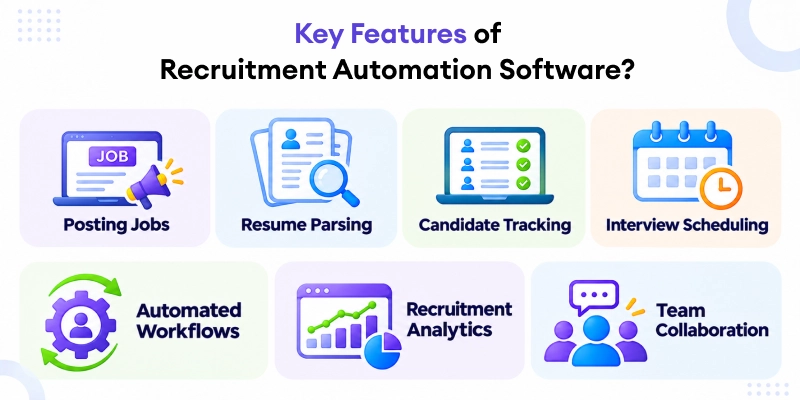
- Posting Jobs: Post your jobs to the suitable job sites and the company careers page giving you total control over your job postings.
- Resume Parsing: Easily extract key information from candidate resumes such as skills, education and work experience. This reduces any manual data entry and provides easily readable candidate profiles.
- Candidate Tracking: Track all candidates throughout the recruitment process by checking the status of all the applications and what action needs to be taken.
- Interview Scheduling: Schedule interviews with candidates and receive automated reminders. By using calendars integration, it minimizes the risk of scheduling the same interview twice.
- Automated Workflows: Automate repetitive tasks, reminders, and applications. This will make sure all your vacancy processes are consistent and organized.
- Recruitment Analytics: Monitor your recruitment activities and identify where there are delays in your process. Recruitment reports will show you where the process can be improved by your team.
- Team Collaboration: Enable collaboration between your recruiters and hiring managers with regards to candidate data and interview results.
Think about what you require from your system to satisfy your recruiting requirements. This depends on factors like how many employees you hire and how large your recruiting team is.
Best Practices for Successful Automated Hiring
To get better results from automated hiring, businesses should follow these practices:
- Identify the skills, and experience required for each position. It will be easier for the recruiter to make an assessment with such hiring criteria in place.
- Make sure that your hiring tools have the capacity to accommodate business hiring requirements, staffing levels, and current HR processes. Your platform should work well with the tools used by your recruitment team.
- The recruiter must determine whether the candidate is fit for the job.
- Candidate data should be accessible only to authorized members of the team.
- It is important that you know how long your hiring takes, the experience of the candidate and the improvement areas.
There is a need for a review of the automatic workflow. In case the job is outdated, the filters are not set properly or if the automated message has not been sent in time it could have an effect on the candidate experience as well as the outcomes of your recruiting process. Getting feedback from your recruiters and candidates will help you to identify the problem areas.
Conclusion
In recruitment automation, it becomes possible to manage some repetitive tasks of the hiring process, such as job postings, candidate screening, and communication. In this way, your HR teams are able to focus on analysing potential candidates.
Through the use of the appropriate recruitment automation tools and regular review of their effectiveness, businesses can reduce time to hire. Yet, human involvement will be necessary to ensure the selection of the right candidates.
Frequently Asked Questions
What is the main purpose of recruitment automation?
The main purpose of recruitment automation will ensure that you reduce your workload when recruiting people since recruiters can concentrate more on doing other activities like posting jobs and scheduling interviews from the site instead of wasting their time on other manual activities.
How does recruitment automation software reduce time-to-hire?
Automation of processes such as application collection, resume screening, contact management, and interview scheduling will contribute towards minimizing the administrative workload and ensuring that proper candidates flow through your recruitment process. Getting information regarding your recruiting process will assist teams in knowing where the weaknesses are and improving those aspects of the process that are slow.
Does automated hiring replace recruiters?
No. The recruitment automation process would help the recruiters by making sure there is no repetition and organizing the information of the candidates. But the decision of recruiting the person would be solely based on the recruiter. Humans will be required here for making sure that the person possesses the relevant skills and communication abilities.
Is recruitment automation suitable for small businesses?
Yes, recruitment automation will be of great help in making the application process, interviews and administrative work easier in your small business organization. Even though you have a small HR team, you can automate some processes which take the most of your time.
What’s the Best ATS for Recruitment Automation?
An ideal ATS tool will have resume screening, automated job posting, candidate tracking, interview scheduling and communication features. Tools like Niyuk.ai, Zoho Recruit, Keka can help your HR team by automating tedious recruitment tasks. Choosing the right tool depends on how many hires you’re making, your specific business needs, integration capabilities and budget.
What Is Recruitment Automation Software?
Recruitment automation software helps companies in automating such tasks through the provision of tools that can help you in creating job listings, screening resumes, selecting the best candidate, schedule an interview, and communicating with the candidate.
How Does Automation Reduce Recruitment Costs?
The use of automation is beneficial when it comes to reducing costs. This is because resume screening and candidate tracking are processes which can be automated hence saving you time during the hiring process. This will ensure that hiring time is reduced, the productivity of recruiters increased and costs of keeping positions vacant reduced.
Author