Key Takeaways
- ATS: Helps to manage applications, shortlisting, interviewing, and track the progress of the candidate.
- Candidate Tracking System: Helps in managing information of the candidates and track their application process.
- Recruitment CRM: Helps the recruiters to manage relationships with candidates, maintain a talent pool, and interact with potential candidates.
- Difference: ATS is used for active recruiting. However, recruitment CRM is used to build relations with candidates.
- Using ATS and CRM: Organizations that require recruiting on a regular basis can use both ATS and recruitment CRM, tools to manage applications and build relations with candidates.
Introduction
Just imagine that you have a highly skilled candidate for the company, but you do not have an any job opening for them yet. After a couple of months, you have a position open, but you can no longer track the individual and thus you’ll need to start looking all over again.
For many HR, this may be a common problem. Recruiting isn’t only about looking for candidates for current vacancies. It also involves the management of the application process, the tracking of the candidates, and maintaining contact and relationship building with candidates for future hiring requirements. This can be challenging to manage, especially when it is done manually, if there are multiple job openings you are trying to recruit for.
As you look into recruitment solutions, you might come across some familiar terms, including Applicant Tracking System (ATS), Candidate Tracking System, and Recruitment CRM.
In this blog we will discuss the functioning of ATSs and Recruitment CRMs, how they are different from one another, and which of them should be chosen by any organization.
What Is a Candidate Tracking System?
Candidate Tracking System is a method which helps you in keeping a track of the candidates. This system will enable recruiters to maintain a proper record of the candidates and manage the whole process of recruitment. Usually, the Candidate Tracking System is known as an ATS. However, certain tracking systems may not have all the features of ATS.
Read More About ATS https://niyuk.ai/blog/applicant-tracking-system/
Key features include:
- Candidate Database: Keep track of candidates in different stages of recruitment process.
- Resume Management: Helps recruiters in managing, organizing and searching resumes of candidates.
- Interview Management: Keeps date of interviews along with feedback given by candidates.
- Candidate Search: Facilitates recruiters in searching for candidates matching their requirements.
Example: This enables the recruiter to easily monitor who applies to several jobs.
This will ensure that your recruitment information is well organized, hence easy for you to monitor without necessarily having to do it manually. The automation feature will help with recruitment automation (follow up, resume screening).
What Is a Recruitment CRM?
A Recruitment CRM system is used by recruiters to develop and maintain a relationship with prospective candidates. Unlike an ATS that is used to manage live applications, recruitment CRM systems help to establish relationships with the candidate before they apply and maintain them. It’s highly valuable to businesses that regularly recruit people or would like to create a pool of candidates in case they need them in the future.
Key features of a Recruitment CRM include:
- Candidate Relationship Management: It helps in communication management with prospective and existing candidates.
- Talent Pool Management: It helps in creating a candidate database for future roles.
- Candidate Engagement: It helps in assisting with personal messaging/emails and follow-ups.
- Candidate Segmentation: It is classification of candidates based on skills, experience, location, and role.
- Recruitment Campaigns: Helping share relevant opportunities to the candidates.
Example: you may find a very experienced software developer, but now they are not interested in changing jobs. This kind of talent could have their information added to a talent pool, and when there is a good job for them, then they could be approached.
This way, recruiters find it easy to make relationships and do not have to begin a fresh when searching for candidates.
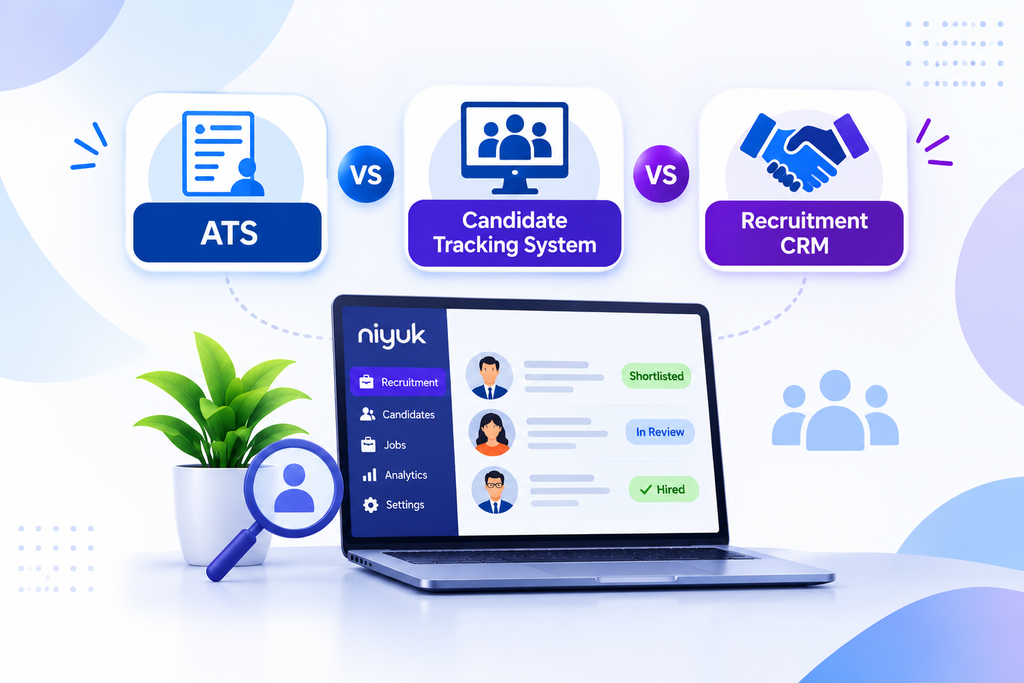
ATS vs Candidate Tracking System vs Recruitment CRM: Key Differences
Although all three terms are related to recruitment, their main purposes are different.
| Comparison | ATS | Candidate Tracking System | Recruitment CRM |
| Primary purpose | Manage hiring | Organize and track candidates | Build candidate relationships |
| Main focus | Active job applications | Candidate records and application progress | Candidate engagement |
| Resume management | Yes | Yes | Depends on platform |
| Application tracking | Yes | Yes | Basic or limited |
| Candidate database | Yes | Yes | Yes |
| Talent pool management | May be available | Depends on features | Core functionality |
| Candidate communication | During hiring | Basic communication | Ongoing engagement |
| Best suited for | Recruitment workflows | Candidate tracking | Long-term candidate relationships |
The ATS manages the recruitment process. The candidate tracking system is useful for managing information and candidates’ progress. Whereas the recruitment CRM will assist recruiters in building relationships with possible candidates.
ATS vs Recruitment CRM: Do You Need Both?
The choice to go with either an ATS or a Recruitment CRM would depend on the kind of recruitment you want to do.
- An ATS would be suitable if you are an organization that receives numerous applications from candidates. An ATS would assist you in streamlining your screening process through managing interviews and making hiring decisions.
- A recruitment CRM would be your choice if you would like to make talent pools, build and develop relationships with your candidates.
- But in case you are constantly hiring people, then you might consider using both ATS and recruitment CRM.
For example, if you use a recruitment CRM to find out potential candidates, then once they apply for a certain job position, you can manage their applications using an ATS.
Some recruitment platforms offer both ATS and CRM.
In case your organization needs to know more about recruitment software and how it integrates within your HR processes, then visit our ATS vs HRIS comparison guide.
Conclusion
ATS, candidate tracking software and recruitment CRM will assist in managing various aspects of your recruiting process. The ATS will assist in managing live applications for vacancies, while candidate tracking software will assist in managing data of candidates and their applications progress and finally, the recruitment CRM will assist in building relationships with future candidates.
The decision that you will take is based on the number of people that you want to recruit, your recruiting process and your overall hiring goals. In case you want to manage the applications and build relationships with the candidates, then integrating recruiting platform might help.
To organize the recruiting process and make sure that the recruiter builds better relationships with the candidates.
Frequently Asked Questions
Is a candidate tracking system the same as an ATS?
Yes, in most cases. They are often interchangeable because both of them are software that assists you in managing your candidate information and applications. However, simple candidate tracking systems might have fewer features than an ATS.
What is the main purpose of a Recruitment CRM?
Recruitment CRM enables recruiters to continue engaging their potential candidates, managing talent pools, sending follow-ups, and interacting with candidates for existing and future opportunities.
Can a Recruitment CRM replace an ATS?
Not necessarily. You can use a recruitment CRM to help you manage the relationship with your applicants. You can use an ATS to manage your existing applications and recruiting processes.
What is the difference between candidate relationship management and candidate tracking?
Candidate tracking refers to tracking candidate information and status. On the other hand, candidate relationship management refers to communication with candidates to interact with them and build long-term relations.
Can small businesses benefit from a Recruitment CRM?
Yes, a recruitment CRM will assist in maintaining databases of applicants, staying in touch with prospective applicants, and finding appropriate applicants for future vacancies.
Author