Key Takeaways
- The utilization of an ATS makes it easier for recruiters to screen applications and keep track of all information related to candidates.
- Some of the main components that an ATS software should have include resume parsing, candidate management, scheduling of interviews, and recruitment reporting.
- Automating the process, an ATS software has helped recruiters maintain better control over their recruiting process.
- Transparency, visibility, and collaboration are some other benefits that an ATS can provide in the hiring process.
- An ATS can help you support your recruiting strategy. This is why selecting the appropriate one depends on your needs.
Introduction
There may be hundreds of applications for one open position that need to be reviewed by recruiters. This will consume a lot of time as well as the process of interviewing, managing candidates, and communicating with them. Doing all these tasks manually may result in the missed applications as well as delays in recruitment.
ATS is a tool which helps the HRs to complete all of these tasks using a single application. Recruiters can keep track of all the applications received and the data that flows to the hiring manager.
Knowing the main features and advantages of ATS may assist companies to choose the right recruitment software.
What are the Key Features of an ATS?
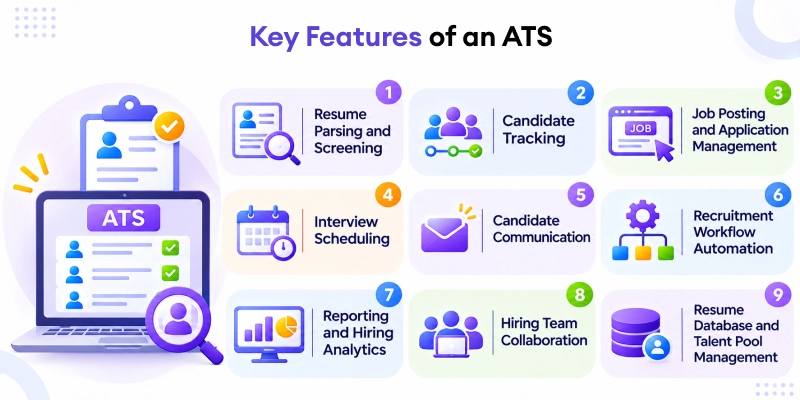
The key features of an ATS are listed below:
1. Resume Parsing and Screening
Resume parsing is the process of extracting information like skills, credentials, work experience, educational qualifications, etc., from the resume and organizing them according to the candidate’s profile.
The resume screening process also helps in filtering out applications based on specific job criteria. Moreover, some ATS systems have AI screening tools that could help the recruiter shortlist candidates that may be suitable for the position. The recruiters need to review screening results carefully.
2. Candidate Tracking
Candidate tracking enables recruiters to keep track of candidates at various levels of the recruitment process such as applications screening, interview process, final assessment, and offers.
It will give a clear idea about the status of each of the candidates and enable recruiters to determine what still needs to be done. This will eliminate the need to use individual spreadsheets for each open position.
3. Job Posting and Application Management
Job posting and application management is an ATS system that enable the recruiter to publish job openings on supported career sites. Applications can be easily gathered using one single system.
This feature is especially helpful when recruiting for multiple positions since recruiters will be able to keep track of applicants for every position.
4. Interview Scheduling
Interview scheduling is a feature that allows recruiters to specify interview slots and to schedule their interviews within the ATS itself.
This helps you to minimize the number of e-mails and direct contacts. The recruiter is able to send invitation and reminders to the candidate in case of modifications.
5. Candidate Communication
Candidate communication is the process between recruiters and candidates via the recruiting process. Recruiters can send confirmation, invitation for interview, update and even rejection mails to the candidates.
The system offers automated e-mail templates, so you don’t have to worry about writing same kind of e-mails every time. Communication has an important part when it comes to candidate experience.
6. Recruitment Workflow Automation
Recruitment automation is about minimizing the amount of repetitive tasks within the recruitment process. Automation can be achieved from your ATS on things such as application acknowledgment, candidate status, interview reminders, and the recruitment process.
For example, when the recruiter forwards the candidate to an interview stage, the ATS automatically sends email notifications.
7. Reporting and Hiring Analytics
Features of hiring analytics provide insight about the recruiting processes through reports and dashboards. Some of the recruitment facts are:
- Hiring time
- Total application received
- Source of application
- Interview-to-hire ratio
- Acceptance ratio of offers
- Candidate numbers by stages of recruitment process
The reports enable the HR managers to evaluate and enhance the process. They also enable the recruiters to make better recruitment decisions.
8. Hiring Team Collaboration
Hiring team collaboration is process of recruitment, where you will have a number of people involved such as HR experts, interviewers and hiring managers. If an ATS is used, you will have a shared platform where all these persons working on a similar hiring process will have a shared space to access interview profiles and interview feedback.
9. Resume Database and Talent Pool Management
Resume database and talent pool management is an ATS feature that allows recruiters to access data from a database of resumes from prospective candidates. Recruiters can use that data to find the right candidate for an existing or future position.
There are some benefits if the company needs one more software developer. The recruiters can look for the previous applicants who had applied earlier for some other similar jobs. So, the company does not need to conduct the entire recruitment procedure again.
What Are the Key Benefits of an ATS?
An ATS provides many advantages apart from handling applications. It assists companies in becoming more efficient with their hiring process.
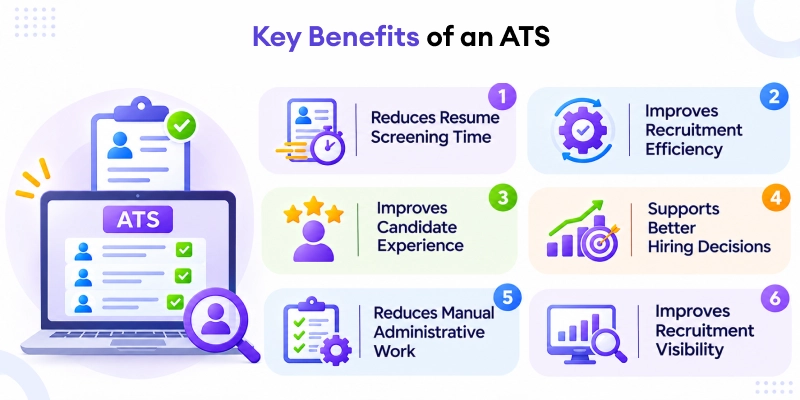
1. Reduces Resume Screening Time
The process of reviewing hundreds of resumes manually may be time-consuming. An ATS may come handy as the resume screening capabilities of the system will allow sorting the information and the recruiter will have to go through the relevant resumes only. This has been observed to save time at the initial resume screening stage.
2. Improves Recruitment Efficiency
Handling the process of hiring employees involves many responsibilities such as managing job postings, dealing with candidates, organizing interviews, and other similar activities.
ATS facilitate these processes in one system. Recruiters can have access to the candidate’s information, track the status of hiring, and control recruitment processes without using various software programs.
3. Improves Candidate Experience
The candidates would like to receive quick replies after submitting an application or going through an interview. The lack of timely communication may be detrimental to their experience.
An ATS is capable of assisting the recruiter to send notifications about the applications received and the interviews conducted. This will help to keep the candidate updated regarding his/her application.
4. Supports Better Hiring Decisions
The ATS allows recruiters and hiring managers to access candidate profiles, screening results, and interview feedback.
This allows the easy comparison of the candidates based on the criteria of job. The recruitment reports are also going to assist the HR team in measuring the recruitment activities and performance.
5. Reduces Manual Administrative Work
Recruiters usually have to allocate their time to undertake tedious jobs such as updating the candidate’s profile, sending emails, scheduling interview appointments, and creating spreadsheets.
Recruitment automation can be helpful in handling these sorts of activities. Consequently, the recruiters have more time to make decisions about the candidates.
6. Improves Recruitment Visibility
Candidate tracking software provides visibility into your applicants at every stage of the hiring process. Candidate tracking software puts the ability to see interviews to be scheduled, candidates to respond to and jobs that are taking too long to fill. This enables teams to follow up on pending work.
Conclusion
Using the applicant tracking system to coordinate your hiring process is a good idea. Applicant screening, tracking, interviewing, emailing, and recruiting analytics through the use of applicant tracking.
ATS is not only an application management tool for recruiting but can automate the repeatable tasks, improve the experience of the candidates, support in hiring decision, and provide more advanced recruiting analytics.
Find out your recruiting needs before implementing an ATS. Implementing the right ATS is what will make your recruitment process streamlined
Frequently Asked Questions
What is the main purpose of an ATS?
ATS systems are purposely created to help organizations track candidates and perform their recruitment and job advertising activities.
What are the most important features of ATS software?
Some of the major characteristics of ATS include resume parsing, resume screening, candidate management, job posting, interview scheduling, communication with candidates, recruitment automation, and recruitment analytics.
How does an ATS help recruiters save time?
Time and energy are conserved using ATS as it screens out the applications, completes the repetitive tasks, interacts with the applicants, and informs the recruiters of the status of the applicants.
Can small businesses use an ATS?
Yes. They can sort the resumes using the ATS, schedule their interviews, and keep their candidates’ progress in the system without creating a separate spreadsheet for each new candidate.
Does an ATS improve the candidate experience?
Yes, there could be a positive effect on candidate experience through such processes as offering feedback and notifications regarding their progress, conducting interviews, informing the candidate about their application status, etc.
Author