
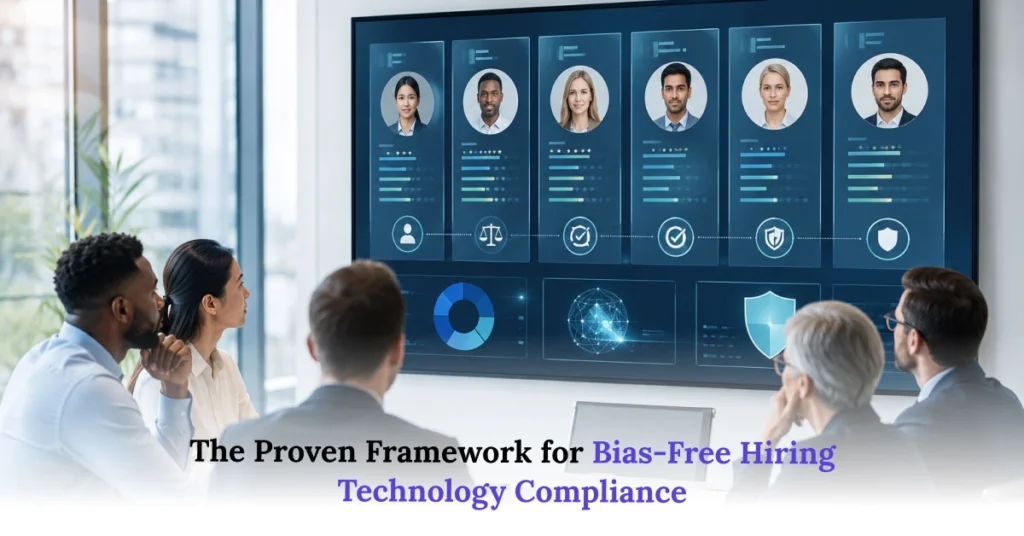
The landscape of recruitment is shifting. Manual screening, fragmented tools, and gut-feeling decisions are being replaced by high-velocity AI recruitment software. But with great power comes significant regulatory responsibility.
Whether you are navigating the EU AI Act, NYC Local Law 144, or GDPR, the message from regulators is clear: Transparency and fairness are no longer optional.
If your team is using an AI interview screening tool or automated sourcing, you need a defensible framework to ensure compliance without sacrificing efficiency. This guide provides a practical, step-by-step blueprint for implementing bias-free hiring technology.
Why Compliance Is Your New Competitive Advantage
Compliance isn’t just about avoiding hefty fines: it’s about building trust. In an era where candidates are hyper-aware of how their data is used, showing a commitment to bias-free hiring technology attracts top-tier talent who value objective evaluation.
The Old Way:
- Manual, subjective resume reviews prone to human bias.
- Black-box AI tools with no explanation for why candidates were rejected.
- Fragmented data across spreadsheets, leading to compliance nightmares.
The New Way:
- Audited, transparent AI algorithms that focus on skills, not demographics.
- Centralized employee lifecycle management software that tracks every decision.
- Automated reporting that makes audits a one-click process.
The 6-Step Framework for Compliance
1. Inventory Your AI Stack
You cannot govern what you cannot see. Start by listing every “Automated Employment Decision Tool” (AEDT) in your workflow. This includes anything that ranks, scores, or screens candidates.
- Categorize by risk: Identify which tools are “high-risk” (e.g., final-stage assessments) versus “low-risk” (e.g., scheduling bots).
- Map the data: Know exactly what candidate data is being processed and where it resides.

2. Implement “Human-in-the-Loop” Workflows
Regulators, especially under the EU AI Act, are wary of fully autonomous hiring. Your framework must ensure that humans maintain final decision-making authority.
- Use AI as an advisor: Use your AI interview screening tool to generate scores and summaries, but require a human recruiter to sign off on shortlists.
- Audit overrides: Track when a recruiter ignores an AI recommendation. This data is vital for identifying if the human or the AI is introducing bias.
3. Conduct Annual Independent Bias Audits
If you operate in New York City or the EU, independent audits are becoming a legal mandate. An audit should measure the “Impact Ratio” across sex, race, and ethnicity.
- The 80% Rule: Ensure that the selection rate for any group is at least 80% of the rate for the highest-performing group.
- Vendor Due Diligence: Only partner with vendors like Niyuk who proactively audit their algorithms for adverse impact.

4. Establish Transparency and Consent Protocols
Candidates have a right to know they are being evaluated by an AI.
- Notice at Collection: Inform candidates before they enter an AI-driven process (required by CCPA and NYC Local Law 144).
- Opt-out Mechanisms: Provide clear instructions on how candidates can request a manual review or opt-out of certain automated assessments.
5. Technical Safeguards: From Sourcing to Hire
Compliance must be baked into the technology, not bolted on. Use AI recruitment software that prioritizes “Privacy by Design.”
- Masked Sourcing: Use tools that remove names, photos, and age-identifying dates during the initial sourcing phase.
- Skill-First Assessment: Shift the focus from “where you worked” to “what you can do” using objective AI assessments.

6. Centralize Documentation
In a regulatory audit, “if it isn’t documented, it didn’t happen.” You need a single source of truth for:
- Bias audit summaries.
- Data Processing Agreements (DPAs).
- Candidate consent logs.
- Historical hiring outcomes.
How Niyuk Simplifies Compliance
Niyuk isn’t just an automation tool; it’s a compliance partner. We’ve built our platform to handle the heavy lifting of regulatory alignment so you can focus on people.
- Audited AI Algorithms: Our AI Sourcing and Screening tools are built on audited, bias-free models.
- Unified Data: By integrating recruitment, HRMS, and automated payroll, we provide a complete, auditable trail of the entire employee lifecycle.
- Explainable AI: Our AI Interview summaries don’t just give a score; they explain the why based on technical skills and competencies.

Frequently Asked Questions (FAQ)
What is NYC Local Law 144?
NYC Local Law 144 requires employers using automated employment decision tools (AEDTs) to conduct annual independent bias audits and publish the results publicly. It also mandates that candidates receive notice that such tools are being used.
Does the EU AI Act affect US companies?
Yes. If you are a US-based company hiring candidates within the European Union, you must comply with the EU AI Act’s requirements for “high-risk” AI systems, which includes most recruitment and HR software.
How do I know if my AI recruitment software is biased?
You must conduct an adverse impact analysis. This involves comparing the selection rates of different demographic groups (e.g., gender, race) to ensure there is no statistically significant disparity.
Can I still use AI if a candidate opts out?
Most regulations require you to provide an alternative evaluation process (like a manual resume review or a live interview) if a candidate requests an accommodation or opts out of an automated process.
What data should I keep for an audit?
Keep records of the criteria used by the AI, the demographic data of the applicant pool (collected voluntarily), the scores assigned by the AI, and the final hiring decisions made by humans.
Start Your Journey to Bias-Free Hiring
The move toward automated, bias-free hiring technology is an opportunity to modernize your HR function and mitigate risk simultaneously. By following this framework, you don’t just stay compliant: you lead the industry in ethical recruitment.
Ready to automate your hiring with confidence? Explore Niyuk’s AI-powered HR suite today.

