Introduction
Have you ever spent hours calculating salaries, only to worry that you may have missed missing something important? Well, most HR departments can relate to such a situation. When dealing with the payroll of several employees, there are chances of making some error, which makes the payroll compliance checklist really important.
Through having knowledge of the payroll regulations and ensuring the information about each employee is updated, the payroll process becomes easier for HR departments. This blog will provide an overview of the essential payroll compliance requirements in India, the common challenges HR teams face, and how payroll processing software and payroll outsourcing can help streamline the process.
What is Payroll Compliance?
Payroll compliance refers to adhering to legal requirements when making employee payments. This involves ensuring proper calculations of salaries and deduction of tax and other contributions, including EPF and ESI from the salary of employees.
Key Compliance Deadlines & Rules
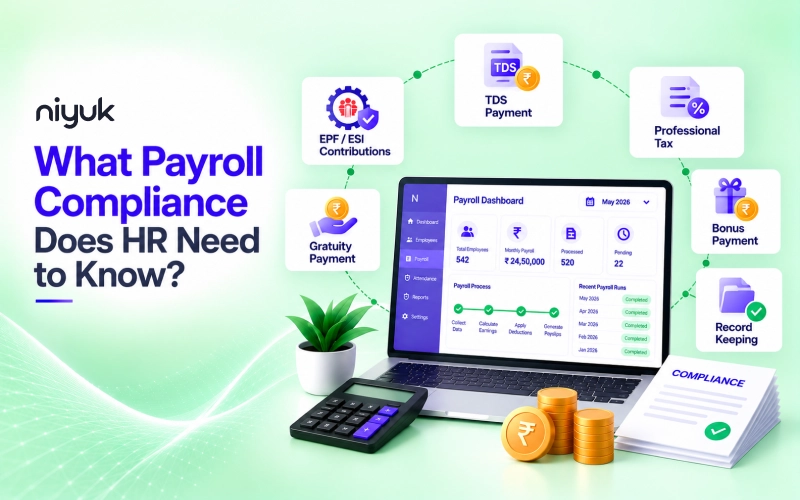
HR team monitors deadlines for the filing and depositing of TDS, professional tax, PF, and ESI. Meeting these deadlines can save your organisation from heavy penalties and fines.
| Requirement | Payment Deadline / Rule |
|---|---|
| TDS Payment | On or before the 7th of the following month |
| EPF / ESI Contributions | On or before the 15th of the following month |
| Professional Tax | As per the applicable state deadlines |
| Gratuity Payment | Within 30 days of becoming payable |
| Bonus Payment | Within 8 months after the accounting year closes |
| Record Keeping | Keep records for 5–7 years, depending on legal requirements |
Why Is Payroll Compliance Important for HR?
Payroll compliance helps businesses to meet their legal obligations while maintaining employee trust.
- Avoiding penalties: Accurate payroll processing can prevent penalties for statutory non-compliance.
- Ensuring accurate salary payments: Checking the payroll ensures that employees aren’t being deducted and paid incorrect amounts.
- Maintaining employee trust: Employees can trust that they will be given accurate payslips and salaries.
- Maintaining payroll records: Having a record of everything to do with payroll helps companies refer to in the case that an audit or any other problem concerning salaries occurs.
What are the Types of Payroll Compliance?
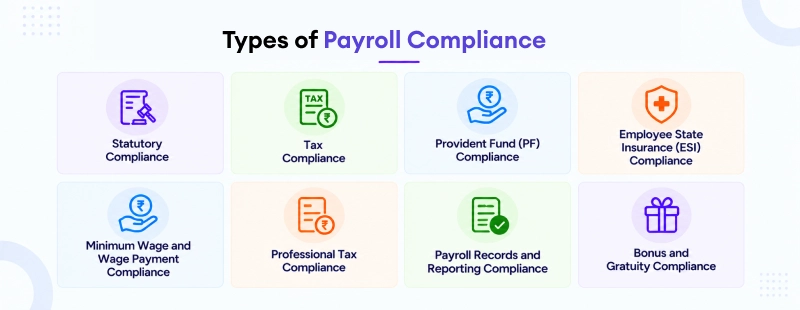
There are defined types of payroll compliance that every payroll professional should be aware of:
- Statutory Compliance: Statutory compliance refers to following the labour laws and rules of employment concerning salaries, work hours, and benefits for employees.
- Tax Compliance: Compliance with taxation regulations entails the deduction of TDS from the salaries of employees by employers before submitting it to the government on time.
- Provident Fund (PF) Compliance: The PF compliance will involve making calculations and payments to EPF by the eligible employers based on employees’ contributions as per relevant regulations.
- Employee State Insurance (ESI) Compliance: ESI contribution is compulsory for employers who are eligible to make contributions for their employees to provide them with certain benefits.
- Minimum Wage and Wage Payment Compliance: This kind of compliance will ensure that the employees get the required minimum wage and that the salaries are paid in the stipulated time frame.
- Professional Tax Compliance: Compliance with the payroll tax will entail employers in states that impose the tax to deduct the correct amount from the wages of employees and remit it to the respective state government.
- Payroll Records and Reporting Compliance: This compliance makes sure that the companies keep all payroll records correct and up to date, from salaries to pay slips to any necessary statutory information.
- Bonus and Gratuity Compliance: This is the process through which all employees eligible for bonuses and gratuity pay receive what they deserve in accordance with the law.
Key Payroll Compliance Requirements HR Must Know
The HR team needs to understand what the main payroll compliance standards for their company are. These standards fall under statutory compliance, and the HR team needs to follow to them.
1.Provident Fund (PF)
Employees’ Provident Fund Scheme is an organization through which eligible employees can save for their retirement years. The HR department should ensure that employees are enrolled in the scheme, calculations are made accurately, and payments are paid timely.
2.Employees’ State Insurance (ESI)
ESI provides eligible employees with social security and medical benefits. Employers have the responsibility to ensure whether the coverage is applicable, compute the contributions, and make the necessary payments and filings.
3.Tax Deducted at Source (TDS)
The TDS on salary is calculated by the employer, and TDS needs to be deducted whenever necessary. The Human Resources department needs to verify the anticipated annual income of the employee, deductions available, and the respective tax laws. Furthermore, the tax deducted needs to be paid to the government in time, along with the requisite forms and certificates. This will ensure that there are no calculation mistakes made during TDS deductions.
4.Professional Tax and Minimum Wages
Professional tax rules may differ by states, including taxation rates and deadlines. It is vital that HR departments have all the information on professional tax laws for all states where they operate.
Firms should observe the minimum wage laws and ensure payment is done timely. HR departments should be aware of any labor law changes and modify their payroll processes accordingly.
5.Bonus, Gratuity, and Employee Records
Based on the rules and regulations of the companies and eligibility of their employees, the company has to give bonuses and gratuity to their employees. It is the duty of the HR team to keep the attendance and salary records of the employees.
What are the Core Components of Payroll Compliance?
- Accurate Salary Calculations: Employers must calculate salaries, allowances, bonuses, and deductions correctly.
- Statutory Deductions: Employers must apply applicable PF, ESI, and professional tax deductions and contributions.
- Tax Compliance: Employers must deduct and deposit TDS within the prescribed deadlines.
- Timely Salary Payments: Employers must pay salaries within the legally prescribed timelines.
- Employee Records: Employers must maintain accurate employee, attendance, and payroll records.
- Statutory Filings: Employers must submit required returns and reports within the applicable deadlines.
- Payslips and Documentation: Employers must provide accurate payslips and maintain payroll documents.
- Regulatory Updates: Employers must stay updated on changes in labour laws and tax regulations.
What are Common Payroll Compliance Challenges?
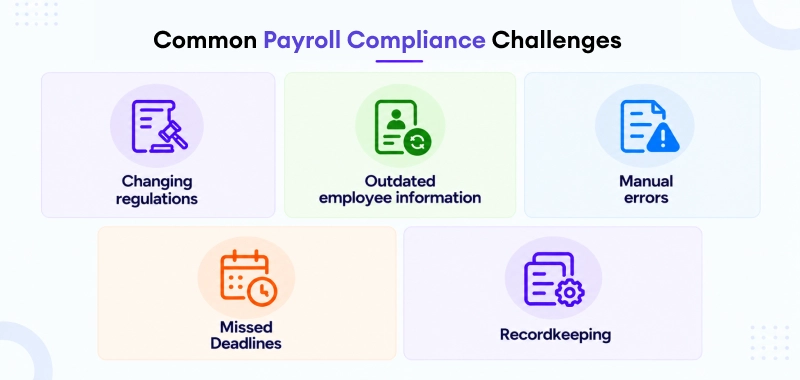
HR teams may face several challenges while managing payroll:
- Changing regulations: It can be challenging to comply with new tax and labour regulations.
- Outdated employee information: Outdated or incorrect salary and employee information can lead to calculation errors.
- Manual errors: The repeated data entry increases the risk of human error, which causes errors in deductions and salaries.
- Missed Deadlines: Several tax filing and payment deadlines can be missed.
- Recordkeeping: It may also cause problems during an audit due to poor recordkeeping and inability to find the required information.
These challenges can increase as a business hires more employees or expands into multiple locations.
How HR Can Manage Payroll Compliance Effectively?
HR teams can follow these practices to improve payroll accuracy and compliance. A payroll compliance checklist help HR teams review salary calculations, statutory deductions, payments, and filing deadlines before each payroll cycle.
1.Review Employee Records
It is essential to update employees’ salaries and attendance data, work schedule, leave balances, tax and banking information. Additionally, double-check their information before paying salaries.
2.Create a Payroll Compliance Checklist and Calendar
In order not to miss anything in terms of making those required payments and deductions, HR departments need to develop a checklist for payroll compliance with all those rules, names of employees, due dates, etc. They will also have to delegate responsibilities for each of those tasks among the members of the team.
3.Review Employee Salaries
Before finalizing a payroll report, HR teams should review each employee’s gross salary, overtime, and leave deductions or additions, taxes, and statutory deductions. The process will help detect errors in the payroll process.
4.Monitor Legal Updates
It is essential that the notifications from the Government be followed up on and changes should be made in the payroll process accordingly. In case of amendments to payroll systems and processes, make the necessary alterations in the payroll software.
5.Conduct Regular Payroll Audits
Checking reports, payments, and relevant laws and regulations periodically can help detect and address errors, and missing details in the payroll process.
How Payroll Processing Software Helps with HR Compliance?
Payroll processing software helps HR departments to maintain payroll record accurately, make deductions, process taxes and comply with statutory laws. This eliminates chances of human errors.
It is also used to ensure that payroll deadlines are met and to keep track of employee information. The software makes it easy for the HR team to manage their compliance process.
Conclusion
Payroll compliance is crucial for a company to remain able to pay salaries accurately, maintain employee trust, and operate smoothly. Therefore, a company’s human resource (HR) department should ensure proper timekeeping, track all relevant deadlines, check calculations, and be knowledgeable about all relevant regulations.
Companies could use payroll processing software for doing such duties and processing the salaries. Payroll outsourcing could be another choice to get help for some payroll duties.
Frequently Asked Questions
How Can HR Teams Manage Payroll Compliance?
The HR department can control payroll through updating employee information, monitoring deadlines, verifying salary calculations, being aware of changes in labor laws, and monitoring payroll documents to detect any errors.
Should Businesses Use Payroll Processing Software for Payroll Compliance?
Companies need to use payroll processing software to help them avoid making mistakes and ensure that all employee data and reporting is well organized. In case of manual payroll processing, there are chances of making errors due to wrong entries or failure to notice any changes in payroll policy.
How to Ensure Payroll Compliance?
By keeping accurate employee records, ensuring employees are paid the correct salary with the correct deductions and ensuring they are filed on time you can ensure your business is compliant with payroll requirements. Using payroll software will help reduce errors.
What Happens If a Business Fails to Follow Payroll Compliance?
Such a company may face underpayment or overpayment of its workers, issues with the employees regarding their compensation, legal problems, and Interest on unpaid statutory dues., where applicable and other liabilities. Thus, it is important to ensure that all records are properly maintained and that the payroll is processed correctly and on time.
Author