
AI Recruitment vs Traditional Hiring: What’s Right for Your Business?
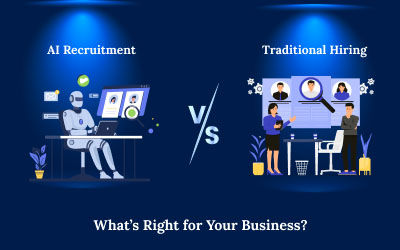
Discover Niyuk. Experience effortless screening and assessments. Book A Demo Every successful organisation’s backbone is a right recruitment. The recruitment process has been transforming a lot over some years, from conventional to now AI is taking over and playing a vital role in talent acquisition for businesses. As AI technology becoming more useful and spreading widely, Now, Hr recruiters and Hr managers have the choice to select between traditional recruitment process or AI-driven hiring process. Now we have, AI hiring software available with us. In this blog, we’ll dive deep into the differences between traditional(conventional) and AI recruitment, rolling out in detail, how AI is transforming the hiring process and helping mitigating challenges in talent acquisition. We will also highlight the prospective challenges AI brings, so you can make a data-driven decision about integrating these tools into your recruitment strategy. The Way Traditional Recruitment Process Works Manual vs Automated Hiring This is a pure manual recruitment process. It begins with job openings being advertised via many channels like job boards, social media, or word of mouth. After this, Recruiters can review resumes, shortlist candidates, and conduct interviews, all these steps are time-consuming and sometimes irregular. For recruitment agencies and HR department, this method relies mainly on human decision. While this enables for personal interactions and customised assessments, it also has its limitations in terms of speed, scalability, and objectivity. Challenges with Regular Recruitment Regular or traditional recruitment has been there for more period now as the go-to method, but it is having several pain points: Time-Saving: Manual screening more than thousands of resumes manually, conducting interviews, and performing admin tasks will make the recruitment process sluggish and non-effective. Subjectivity and Bias: Also, the most genuine recruiters may unintentionally allow unconscious bias to affect their hiring decisions. This will result in a lack of variety or unfair edge for some candidates. Limited Candidate Pool: Conventional methods mainly depend on job boards or individual networks, which normally limit the talent pool, specifically when looking for very niche or global candidates. Inconsistency: Each recruiter would assess resumes and conduct interviews separately, which leads to non-synchronisation in the recruitment process, making it complex to smart comparison of candidates. Redefining the Recruitment Journey in AI Way AI recruitment tools are completely changing over how talent is sourced, screened, and hired. By automating redundant tasks and enhancing decision-making processes, AI is resolving many issues that troubled in conventional methods. Niyuk is an AI-driven HR hiring platform designed to support recruiters make smart decisions in record time. Niyuk does the smart scanning of over 7 million profiles and match candidates to the right job based on their skills, experience, and personal choices. Here’s how Niyuk improves recruitment: Fast Candidate ShortlistingNiyuk helps you shortlist candidates in less than 24 seconds, saving your measurable time in the hiring process. AI Video InterviewsWith built-in AI video interview feature, Niyuk assures a simplified interview process which is rapid and more comfortable for both sides- recruiters as well as candidates. Multilingual CapabilitiesAvailable in more than 10 languages, Niyuk opens recruitment global level opportunities, assuring that talent can be resourced from anywhere, without any language barriers. Customizable Job DescriptionsNiyuk enables you to make individualised job descriptions, making sure about the right fit for every role.By using AI, Niyuk helps resolve the challenges those have conventionally slowed down the recruitment process, giving a fast, more efficient, and almost 0 biased approach to talent acquisition. Unlock efficiency with cutting-edge recruitment automation tools. See why AI hiring software comparison consistently points to AI’s advantages. Contact Us Challenges with AI in Recruitment Even though AI has many advantages, there are certain challenges to cope up with as follows: Over-Dependency on AlgorithmsOne of the risks of AI recruitment is that over-dependency on algorithms may lead to mechanical decision-making. While AI can identify patterns, it may ignore the human qualities that make candidates a suitable fir to the culture or may bring distinct strengths to a role. Human Factor in HiringAlso, AI tools can make hiring a lot simple, they just can’t put in the personal touch and the way relationships are built in traditional recruitment process.Some job aspirants would feel a bit put off by a process that feels too impersonal, or they might miss out on some valuable insights which only a recruiter can share during a real human conversation. Initial Cost to BearStarting with AI tools means investment in new technology and ensuring everyone knows the way to use it. For small companies or recruitment agencies, that initial cost can feel like a big block. Anyhow, when you look at the big picture, the long-term benefits – like closing roles faster and finding much better candidate matches – normally make that upfront investment worthy. Base of Good DataAI is only as smart as the data-based information it captures from. If the data it’s trained on is biased or incomplete, the AI tool might end up giving recommendations, that are either not correct or unfair. So, making sure that the data you feed into the AI is top-quality and diverse is required for really getting the best out of it in recruitment. Traditional Hiring vs AI Recruitment: A Comparison So, find below given quick comparison between traditional hiring and AI recruitment: Factor Traditional Hiring AI Recruitment Speed Slow, with manual steps and delays. Fast, screening automation and scheduling. Scalability Limits on how much a recruiter can handle. Scales easily, handles high volumes of candidates. Bias Can be influenced by unconscious biases. Reduces bias, works on data and skills. Personal Touch Develops strong relationships, entrust on fit. Less personal, but fast and more efficient. Cost Lower upfront cost, but labour more. Higher initial cost but saves time and money in long-term. Consistency Variable between recruiters, can be inconsistent. Regular, data-driven decisions. Efficiency Slow and admin-heavy, with high manual work. Simplified and automated, time saving. Both traditional or conventional recruitment and AI-powered recruitment have their doubtless existence in the hiring process. As AI delivers efficiency, speed,