
How Niyuk Handles 5 Top Challenges Faced by Modern Recruiters (2026)

Discover Niyuk. Experience effortless screening and assessments. Book A Demo Hiring professionals in 2026, are operating in an increasingly tough environment where conventional recruitment methods juggle to maintain required speed with business demands. From uneven expectations among the stakeholders to pressure- driven admin tasks, recruiters get stucked unnecessarily sometimes, between giving quick results and maintaining quality. Such challenges faced by modern recruiters are not just incidents. But they represent system issues affecting recruitment efficiency across global industries. The latest recruiter’s day often involves handling of endless email chains, manually screening thousands of applications, expecting feedback from very busy hiring managers, and struggling to show strategic value while drowning in operational tasks. These kinds of bottlenecks make a cascading effect which affects time-to-hire, candidate experience, and business results. What’s frustrating is that many such issues are generated out of very old processes and backword technology used for talent acquisition. Anyhow, forward-thinking companies are changing these recruitment bottlenecks into competitive advantages via strategic process improvements and smart automation. By mitigating five critical areas professionally, recruitment teams can transform from reactive order-taking to strategic business partnership, delivering measurable value while making exceptional experiences for candidates and hiring stakeholders both. Solutions e.g. AI screening offered by platforms like Niyuk.AI reducing administrative cost up to 60-75%, while improving candidate experience and hiring results. Uneven role expectations raise time-to-hire by 40% and responsible for 30% turnover rates in the first year. Recruiters spend up to 40% of their valued time on communication instead of searching quality candidates. Popular positions now receive 200-300 applications needing 20-40 hours of manual screening time role wise. Delays in giving feedback more than72 hours result in candidate drop-off rates ahead of 25%. AI-based screening platforms get a 75% drop in time-to-shortlist while maintaining assessment standards. Organizations with 48-hour screening reply time experience 35% higher candidate acceptance rates. Automated recruitment solutions drop administrative tasks by 60-75% while improving quality of the process. The transformation from tactical recruitment function to strategic business partnership needs systematic attention to these interconnected challenges. Successful organizations deploy complete approaches aligning process improvements with smart technology adoption, allowing recruitment teams to focus on relationship building, strategic workforce planning, and market intelligence delivering genuine strategic value to business’s success. Let us elaborate on challenges faced by recruiters. Automate your Busy Work to Focus on the Talent Switch to latest recruitment methods saving your daily hours Advance My Hiring 1. Mismatched Role Expectations from Stakeholders This is very long-term challenge for recruitment professionals is the mismatch between different stakeholder’s expectations to meet for the role. Hiring managers mostly have some expectations or requirements regarding an ideal candidate for the post. HR teams have requirements based on company policies and budget limits. But the executives may have fully different expectations based on strategic objectives. This mismatch makes a domino effect via the recruitment process. This leads to waste of time, frustrated candidates, and in actual, failed placements damaging both efficiency parameters and professional relations. 1. The Loss of Mismatched Job Requirements The basic cause of this misalignment stemming from less upfront collaboration during role definition phases. Placement managers focus on prompt tactical needs without thinking about any broad organisational context. As HR professionals may focus on compliance and cultural fit over certain technical requirements. Meanwhile, executives mostly introduce sudden changes based on market conditions or strategic moves, making moving targets that creates regular candidate evaluation mostly impossible. 2. Filling up the Gap of Communication This alignment gap becomes certainly hassle when recruitment teams invest remarkable time sourcing and candidates screening who really do not match stakeholder expectations which were not communicated or documented. How Niyuk Fixes This: Creates a single, shared role definition for hiring managers, HR, and leadership, so that they can easily align among them for the best fit. Documents and prioritises expectations upfront (must-haves vs flexible criteria). This will ease the exact expectation for the role from a candidate. Applies consistent, role-based screening rules for all candidates, so fair chance to each one of them will be given by the employer to prove their skills. Makes expectation changes visible to all stakeholders in real time, to avoid further confusions before final shortlisting. Prevents wasted shortlisting and late-stage candidate rejections with AI driven processes of sorting in time. Keeps hiring aligned, faster, and fair throughout the process by all process’s automation. 2. Continuous Two-end Communication Cycles As per the research, poor job requirements increase time-to-hire by an average of 40% and support to turnover rates more than 30% in the first year of employment. When stakeholders are not happy with the basic role expectations, recruitment teams mostly find themselves starting the process for many times with various candidate profiles. This makes a cascading effect where prospective candidates lose interest due to prolonged timelines, quality candidates are lost based on shifting criteria, and recruitment teams also lose credibility with both internal stakeholders and external talent pools. The financial impact extends apart from the immediate recruitment costs to include lost productivity from unfilled positions, extra workload for existing team members, and the hidden costs of re-recruiting when mis-hired employees inevitably quit. Organisations with clear and aligned job requirements normally see 60% fast placement rates and remarkably grow in new hire satisfaction scores, displaying the tangible benefits of time investment in proper role definition upfront. Good organisations implement well-designed requirement-gathering processes which bring all stakeholders on a common page before hiring. This consists of conducting workshops where recruitment managers, HR representatives, and executives join to define required and preferred qualifications, discuss and analyse real- market availability for expected skill combinations, and to set clear decision-making criteria guiding the actual candidate evaluation. These activities could produce documented job profiles that all parties duly sign on, creating accountability for maintaining consistent expectations via the hiring process. Latest recruitment mostly becomes ineffective by communication overheads, with recruiters incurring up to 40% of their time only in management of email chains, coordinating schedules, and offering repetitive status updates over identifying and engagement of quality candidates. These communication cycles typically involve multiple stakeholders who need different information at different frequencies, making a tedious web of human coordination becoming increasingly tough to manage as hiring volume improves. The challenge intensifies when considering the global type of many organisations, where stakeholders operate across various time zones and have variable communication preferences. A single recruitment process might involve hiring managers in multiple locations, interview panels with challenging schedules, and executives needing regular updates with limited availability for complete discussions. This develops a situation where recruitment progress slowdowns to accommodate the lowest common denominator of communication efficiency, mostly results in top candidates accepting other offers while internal coordination goes on. How Niyuk Fixes This: Brings all hiring communication into one shared platform to avoid any hassle among them to provide ultimate synchronisation. Keeps role requirements, updates, and feedback visible to all stakeholders to offer a uniform level of transparency throughout the process. Enables structured, stage-wise feedback instead of ad-hoc discussions to offer clear communication to candidates and stakeholders. Reduces coordination effort and speeds up hiring decisions so that right candidates can be acquired in timeline. 1. Emailing Stress and Scheduling
5 Solid Steps to Implement Recruitment Automation for HR Processes

Discover Niyuk. Experience effortless screening and assessments. Book A Demo Recruitment automation is one kind of blessing to HR recruiters today. In conventional recruitment process, HR recruiters or HR teams used to do lot of manual work, several repetitive tasks. This takes up lot of energy and time for HR people. Many times, candidates get divert to other opportunities due to delays occurred in between the whole process. Recruitment automate plays a key role here. It mostly in form of software, automatically reviews resumes, sort them and do follow ups with candidates to arrange interviews. It also arranges interviews for the selected or filtered candidates. First, let us get well verse with Recruitment automation in the next section. Use AI Recruitment Tools to hire Faster Fix your hiring process with our recruitment automation software Book a Niyuk Demo What is Recruitment Automation? Recruitment automation refers to the use of software technology to automate repetitive tasks of you hiring process. It includes many tools and software made to streamline tasks like sourcing candidates, interviews scheduling, and interaction with applicants. Recruiters all over the world are now focussing to use or implement recruitment automation software to simplify their tasks of below given common types: To provide best quality candidates. To offer a positive candidate experience. To meet customer’s requirement in less time. Responsible Factors of Recruitment Automation Find here, the real responsible factors to get diverted to Recruitment Automation. They are most important. We can treat them as the bottlenecks, which needs to be addressed properly. 1. The Rising Complication of Talent Acquisition As companies are growing globally and the skills required for jobs evolve, the process of searching for the right candidates becomes increasingly tough. Automation supports simplifying this great complexity by smartly sorting via large volumes of applicants and massive screening to find out those best suitable ones for the roles. This is exactly where recruitment automation software enters in to bridge the gap. In a dynamic market of recruitment automation software India, the sheer volume of resumes can confuse a lot to a HR team. By integrating AI recruitment tools, you are not just filing digital paperwork; you are basically upgrading your full hiring process. These AI in recruitment process solutions act as a 24/7 digital helper, handling the heavy task of initial screening so your team can focus on the more important side of the job. Also, implementation of recruitment process automation removes the uneven experience for candidates. Over more manual to-n-fro emails, an interview scheduling software can sync directly with your calendar, allowing top talent to pick a suitable time working instantly. Upgrade your Hiring Process recruitment automation software handles the big task Start with Niyuk Now 2. The Efficiency Required in High-Volume Recruiting Some sectors influenced by high-volume hiring, like retail, hospitality, and customer service BPOs, automation plays a fundamental role in simplifying the hiring process. These bulk hiring in time are the real bottlenecks for such industries. For consistent productivity and service delivery or quality of services offered in time, hiring strategies must be perfect. They must be fully satisfying the business requirement of the business. Mass hiring drives many times are for some urgent, important project operations. So, for the same these manpower requirements in required size and skills are the priorities to serve. Massive hiring takes more time with conventional recruitment process. Using Automation tools is the right solution for such scenario. Using automated tools for tasks like resume screening, interviews scheduling, and communication excels hiring and making sure for consistency, allowing recruiters to focus on strategic aspects of talent acquisition. Automated tools help in improving the overall efficiency of mega hiring, buy saving the time with the use of automated tools. 3. Technological Edge & AI Integrations The AI integration and machine learning technologies in recruitment tools has made it possible to automate not only administrative parts of hiring but also important aspects, like candidate engagement with prior-selection assessments. Developing an AI-first enterprise to automate the recruitment process by automating screening from screen data and selecting the best potential candidates to recruit. This technology will analyse big amount of data to predict which candidates are most suitable for the role. 4. Emphasis on Data-Driven Decisions Automation helps in decision making very effectively. These automation tools support to take prompt decision on basis of data-driven insights to close positions faster. This data-driven approach to recruitment allows businesses to maximise their hiring strategies, predict future hiring requirements, and improve complete HR processes. Data insights encourage for perfection in decision making. This involves AI automation and technological use in recruitment process. Benefits of Recruitment Automation You wish to recruit good candidates; you need to portray your requirement to job seeking candidates for those roles or companies looking for them. For this task, you need not to deploy more staff. You can still accomplish this task. This is possible with automation in recruitment. 1. Accelerate the Recruitment Process Recruitment cycles may be dramatically exceled by automating many of the routine tasks in the recruitment process, like screening resumes, conducting initial phone screens, and interview scheduling. Recruitment automation allows recruiting teams to manage a high volume of applicants more quickly and efficiently over relying solely on human recruiters’ time and availability. This really reduces the time needed to fill open jobs. 2. Improves Hiring Quality There are two main recruitment KPIs recruiters have – hiring quality and time-to-fill. Quality of hire will specify the efficiency of the candidates in your customer’s company. We must say recruitment automation offers hiring accuracy and saves ultimate time and money of end customers. In case, if recruiters select a candidate as prospective but whose performance resulted in complete failure. Then after certain time, the employee will leave the job, and the position again becomes vacant. The entire channel must repeat again. But with deployment of recruitment automation, you will get quality candidates required specifically for the job role. In case of massive employment drives, a sure chance of ‘wrong candidate’ selection, but recruitment automation takes care for the same. 3. Positive Candidate Experience Automated systems offer intime updates, feedback and communication, creating candidates feel valued and informed via the process. This individualised touchpoint inspires a positive impression of the organization, improving the chance of acceptance, if an offer is provided. Also, the simplified process lowers waiting times and uncertainty, aspects highly appreciated by candidates from current competitive market for jobs. 4. Mitigates Unconscious Bias There’s no other way of getting rid of basic hiring biases than recruiting automation. Mostly, when you go via CVs manually, you might be unconsciously biased for a candidate. Many factors can provoke this, including social stereotypes, cultural context, any type of personal experience, background, religion, and more. When you use recruitment automation, you end up with objective and analytical, thereby mitigating any form of hiring biases. This will, in turn, help your diversified hiring efforts. 5. Lowers Recruitment Costs and Improves ROI You can significantly drop operational costs related with manual hiring activities. These Automation tools ease tasks allowing talent acquisition teams to use their resources more efficiently. This minimising of human effort cuts down expenses and accelerates the recruitment cycle, boosting return on investment (ROI). Also, by rapidly identifying and engaging top talent, companies improve their chances of getting top quality hires, further sharing to a strong ROI. Easy steps for Implementing Recruitment
How Automated Interview Scheduling Changed Manual Hiring Back-and-Forth
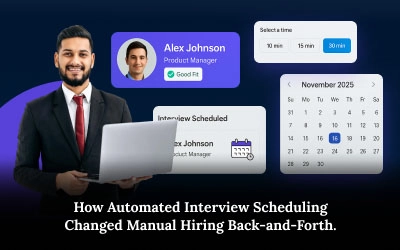
Discover Niyuk. Experience effortless screening and assessments. Book A Demo Manual interview scheduling for the headhunt of the ever-best talent for every required role. But manual scheduling has a lot of flaws like delays, inefficiencies and loss of opportunities to grab top talent. For HR professionals and recruitment managers, interview scheduling is not only time –taking but also puts on extra administrative burden and causing scheduling conflicts. This ultimately, damages the candidate satisfaction. Automated Interview Scheduling is the master key for all such HR people to save their valuable time and efforts. Niyuk comes up with some transforming approach about interview scheduling. It makes life easy for the recruiters by simplifying the entire process from resume screening to assessment of the candidate with the help of AI technology. With the use of Niyuk, HR recruiters not only able to simplify the operations but also drops down time-to-hire, saves remarkable work time and efforts, to divert themselves on more priority tasks. In this important blog article, we are going to discuss about the transformation of conventional manual interview scheduling over automated interview scheduling. Let us unfold this discussion in following sections here. The Bottlenecks in Manual Interview Scheduling Manual interview scheduling is the main hurdle in many organisations today. HR professionals and recruiters use to work for long lasting hours just in mailing candidates for discussing the suitable interview schedules, arranging their interview slots with the calendars and getting their confirmations after such hard efforts. This complex coordination mostly shows: Last-moment cancellations or no-shows due to lost interview chances Prolongness in candidate’s journey via the hiring process Double(multiple) bookings and scheduling hassles Negative candidate experiences due to inefficient communication Bulk workload on recruiter and administrative burden Such types of inefficiencies hamper HR resources and risk of top talent loss to active competitors. Our Automated Interview System Runs 24/7 Vetting skills for your team Start Automating Interviews Today with Niyuk! What is Automated Interview Scheduling and How it Functions? Automated Interview scheduling is a software solution removing humans from the calendar-coordination loop in recruitment process. It is a software allows candidates for self-schedule and reschedule interviews without recruiter’s intervening efforts, as per the industry analysts. It acts in below 4 things: Calendar sync in real-time The application synchs with Google or Outlook calendars and collects open and occupied time slots without considering event specifications. Mutual-availability engine The mutual-availability engine which compares the candidate’s time zone and the interviewer’s schedules to recommend only options that are comfortable for both parties. Self-service booking link Candidates get a branded URL or SMS that promptly updates all stakeholders’ calendars. Clever follow-ups and reminders SMS, emails are sent an hour before the call and 24 hours in advance. Benefits of Automated Interview Scheduling In actual, a timely shift from manual to intelligent interview scheduling gives more constructive benefits for HR staff, recruiters: 1. Recruiter Workload Interviews scheduling automation and prompt candidate communication makes recruiters free from routine, time taking administrative tasks, permitting them to focus more on strategic talent evaluation and engagement. 2. Higher Interview Completion Rates Automated reminders and multiple-channel communication options reduces no-show rates substantially, making sure for smooth hiring channels and fast decision making. 3. Accelerated Time-to-Hire Simplified scheduling increases candidate progress, consumes time effectively and giving edge to the HR people to close certain positions in today’s smart job market. 4. Enhanced Candidate Experience Gives flexibility to the candidates to plan their own interview schedules and set proactive reminders. This improves their satisfaction level up too much extent. These benefits directly impact recruitment results, making Niyuk as a strategic investment for HR leaders expecting important improvements in hiring efficiency and quality. Types of Automated Interview Scheduling Tools There are different types of automated interview scheduling tools are available. Every type comes with some unique features and benefits. Here are some popular types: 1. Calendar Integration Tools Calendar integration tools get integrated with your current calendar software, like Google Calendar or Outlook. These tools allow recruiters to share their availability status with candidates. Candidates can view, choice for their available interview time directly from the calendar of recruiter. Calendar integration tools are easy for use. They may save time by removing the need for dual-sided communication for a while or for a longer time than usual. Calendly is a popular calendar integration tool allowing recruiters to share their calendar availability and do changes in their booking page with their brand colours and logo. Candidates may select a convenient time slot for them, which gets added automatically to the recruiter’s calendar. This tool helps for auto reminders sending to candidates before the interview. 2. Chatbot Tools Such tools are based mainly on artificial intelligence (AI) technology to interact with candidates and schedule interviews. These tools answer basic queries, offer candidates feedback rapidly, and may help in simplifying the recruitment process. Chatbots can also help to deliver a better candidate experience by 24/7 availability and offering rapid and informative replies to candidates. 3. Interview Scheduling Platforms Interview scheduling platforms gives a centralized system for interview scheduling and hiring process management. These platforms offer features – automated reminders, confirmation status tracking, and scheduling data insights. They are especially useful for big sized organizations those need to manage multiple interviews across various hiring teams and locations. Well, Niyuk takes care about all such requirements for organisations as well as recruitment agencies. Selection of Right Automated Interview Scheduling Tool To select an automated interview scheduling tool, it’s crucial for considering many factors for making sure to pick a correct scheduling tool meeting required for your organization. Think about those features vital for the recruitment process. They may vary widely between various interview scheduling tools. So, it’s important to get a tool with features you are looking for. Suppose you schedule interviews frequently with candidates in various time zones, you may need to think a tool with a built-in time zone converter. And, if you are really managing a high-volume recruitment process, you can wish to look for a