
From Fraud to Authenticity: The Role of the AI Interviewer

Discover Niyuk. Experience effortless screening and assessments. Book A Demo Fake Candidates and Authenticity issues are the real uneven faced by Hr and recruitment people today. Businesses loose almost 30% of the cost of their first year’s income due to wrong hiring or bad hiring. This issue happens due to wrong information provided by candidates about their skills, experience or identity. This not only damages with extra expenses on hiring and recruitment, forcing for litigation also in many cases. This tarnishes your company image, as well. AI Interviewer is the real solution here. Fake candidates do proxy identifications or representations, deepfake and voice manipulations. Interviewer AI is the remedy over all these practices. In today’s AI era, many techniques have evolved, with which companies can cope up with these bottlenecks. Advanced AI- based fraud detection systems using voice biometrics and prompt behavioural analysis to strengthen hiring process. Want to Scale Interviews? Our AI Simplifies the Process Contact Us Existing Position of AI Recruitment Tools AI- driven recruitment systems have shorten hiring time by maximum 70%. Above all, 86% of recruiters are experiencing of improved efficiency with AI-driven solutions. AI recruitment tools improve 2 main functions. 70% of companies apply AI to write job descriptions and their marketing emails. Also, 70% of companies apply AI for scheduling interviews. NLP has really transformed these systems’ capabilities. Latest AI tools analyse unstructured data collected from various sources like phone calls, interviews, resumes, cover letters, and social media profiles and learn and adapt and enhance their replies on basis of various inputs of data to improve their outcomes other than regular automation. The future is prospective. As per sources, 67% of HR professionals experienced a positive impact of AI in hiring process. AI powered recruitment is the new upcoming trend today. With Ai, we can reduce the bias and focus on real things like skills and certifications rather than demographical data. These AI recruitment tools do everything. They reply to simple questions through chatbots to conduct real interview screenings. AI tools for hiring have many proven benefits. In the next section, let us see how AI technology detects fake candidates. Detection of Fake Candidates via AI The foundation of modern recruitment fraud detection is Machine learning algorithms. These efficient systems analyse patterns and predict threats faster and adapting to new deceptive tactics. The big issue arises with those candidates, who have used AI to generate their resumes. Nearly 42% of companies use AI tools to detect such fraudulent applicant’s source. These systems spot out common red flags like keyword stuffing, uneven formatting, and AI-generated content markers in resumes. AI detection systems work more sophisticatedly for interviews. They can easily identify mismatched voice-to-mouth movements and managed responses from out of-screen sources. This technology is certainly valuable when detecting deepfake attempts, where during interviews fraudster candidates manipulate their voice or appearance during virtual interviews. Machine learning has improved a lot in background verification task. AI systems check educational qualifications and employment histories at a time, on a larger scale. This makes the scrutiny (verification check) process faster and very useful in case of large-scale hiring camps. All these systems mainly depend upon predictive models built from earlier fraud cases to find out subtle deception signs. Even, they utilize modern tools to restrict automated mass applications, making sure that only quality candidates move ahead to the starting round. Ongoing background checks provide an additional layer of security. Latest Voice and Video Analysis: for Candidate Authenticity with AI Powered Hiring AI-powered voice and facial analysis tools are really transforming modern recruitment scenario. As per the latest research, 76% of companies are going to use AI for interview questions by 2025, and 63% companies are planning to get facial recognition data. Now, AI recruitment platforms analyse candidate interactions in various ways. They use data on voice patterns, intonation, and body language to check authenticity. Smart algorithms may detect small changes in eye movements, jaw movements and mouth positions that might reveal impersonation attempts. Voice analysis has developed now, beyond simple authentication. AI systems track speech patterns, tone variations, and natural pauses which could indicate fraud. 86% of candidates are in favour of attaining AI voice interviews over conventional video or chat-based assessments. Many platforms have empowered their verification processes by joining ID checks with social profile validations on sites like LinkedIn, GitHub, and GitLab. This 2-step process has remarkably declined candidate imitation risks. Key indicators these technologies check include: Speech patterns and voice consistency across multiple interactions Authentic replies versus AI-generated or scripted answers Natural eye movement and the screen engagement Apart from basic screening, such systems offer deeper insights into candidate authenticity by locating unnatural eye movements or voice patterns giving signal fraud. The industry is regularly evolving its approach with latest analysis tools which create a more secure, efficient hiring process. Companies may verify candidates now with more confidence making sure for a positive experience. AI Screener leverages advanced technologies like computer vision to offer trustworthy remote proctoring features, making sure for a smooth, secure interview experience. Key features are: AI-powered Recruitment: The platform uses AI resumes screening, conduct automated video interviews and analyse candidate performance. Mass Recruitment: It is designed to smartly screen, interview, and shortlist many candidates. Avoid Bias in Hiring: The tools aim to drop down human bias by offering structured evaluations and data-driven reports. Tailored Assessments: It offers over 100 pre-built assessments for various job roles and allows for customization. Time & Cost Savings: By automating early-stage interviews and candidate screening, it saves significant time and resources of companies, using it. Niyuk.AI’s platform is available online and aims to simplify the hiring process for businesses of all sizes, from startups to large enterprises. Benefits of Using AI Interviewers for Authentic Hiring Using AI to detect fake candidates presents several important benefits: Enhanced Reliability and Accuracy: AI lowers manual error, offering correct insights across candidate’s skill and candidate authenticity. Time and Cost Efficiency: AI screening primarily drops resource costs, permitting the recruiters to
AI in Recruitment Shaping the Future of Hiring in 2026
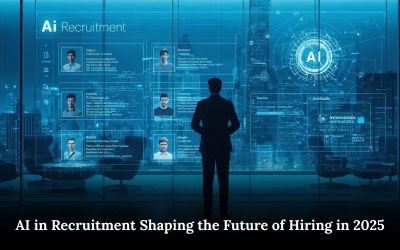
Discover Niyuk. Experience effortless screening and assessments. Book A Demo Hiring in 2025 is all about making future-ready teams and not only filling up the positions. AI in recruitment is now at the centre of the significant change in the hiring landscape. Intelligent systems are revolutionizing the way businesses recruit evaluate and retain talent from resume screening to onboarding. But let’s be clear: This is not a tale of human beings being replaced by machines. It looks after technology improvising the human potential. AI in recruitment is a new trend in global HR arena nowadays. It has been a game changer for the hiring and recruitment word so far. Intelligent Recruitment as Opposed to Traditional Hiring Conventional hiring practices have long been the standard including phone screenings manual resume reviews and gut-based selections. Traditional hiring and its techniques are becoming less effective in today’s fast-paced data-driven world. Overwhelmed recruiters. Hundreds of applications may be submitted to a single job posting many of which are never read. Bias intrudes. Promising applicants are passed over. Furthermore, hiring timelines are much longer than what companies can afford. About intelligent recruitment: a more efficient, quick and balanced hiring process. Ready to Move Ahead of Traditional Hiring? Explore how AI in Recruitment process can help you find top talent faster and smarter. Contact Us What Makes AI in Recruitment So Effective? What Makes AI in recruitment So Successful? Let’s examine the main ways that AI recruitment software is altering the landscape. Analogous intelligent robotization and real-time conversational capabilities are used in client support systems, where AI call center companies help manage high-volume voice and text relations seamlessly. 1. Intelligent Screening of Resumes In the past keyword stuffing was common. AI recruiting tools of today examine resumes for potential context and relevancy. To provide recruiters with a more comprehensive and accurate picture of each candidate they evaluate their abilities background and even career path. Results have been striking for companies such as Unilever. They improved candidate quality overall and cut hiring time by 75% by automating resume screening. 2. AI Video Interviews AI platforms for video interviews performs more than just a visual dialogue today. They examine word choice tone and facial expressions to reveal information about a candidate’s confidence communication style and cultural fit. This improves human judgment rather than replaces it. Richer data gives recruiters the ability to make better choices and make stronger hires. 3. Predictive Hiring Analytics Imagine being aware of not only who is qualified but also who has the best chance of succeeding. Predictive analytics has that kind of power. AI-powered hiring systems predict team compatibility retention and performance by examining past data. By utilizing these tools Amazon and IBM can create diverse high-performing teams demonstrating that strategic hiring is more than just efficient. 4. Real-Time Candidate Engagement Modern chatbots for hiring provide round-the-clock assistance. They make the process easier for applicants and reduce the administrative load on HR departments by providing updates scheduling interviews and answering questions. Hiltons chatbot for example handles thousands of interactions daily to guarantee that no candidate is left in the dark. 5. Job Descriptions that are Optimized Making inclusive and interesting job postings has become a science. AI systems examine listings that are successful and recommend changes to the tone organization and keyword usage. By doing this bias is lessened and the right candidates are drawn in. To help hiring managers set reasonable expectations some platforms even forecast the volume of applications. Some sophisticated systems also examine candidate behaviour such as how long a candidate reads a post or which sections they skip to enhance future listings. Underrepresented groups find more appealing roles when implicit bias is eliminated via inclusive language checkers. Recruiters can proactively modify schedules and sourcing strategies by use of predictive analytics to predict the volume of applications received for a position. Startups, SMEs must develop job descriptions that accurately reflect company culture and resonate with conversion, if they want to equally compete with the larger companies. 6. Skills-Based Assessments AI-powered hiring focus more on a candidate’s abilities over their background. Self-taught experts have an equal chance in skills-driven assessments that measure technical knowledge problem-solving abilities and coding proficiency. With the help of these tools, Google and Microsoft are spearheading the effort to access unconventional talent pools. AI tracks performance patterns including creativity adaptability and speed at solving problems while platforms like Hacker Rank, Codility and TestGorilla enable recruiters to build tests that are in line with jobs. Career changers bootcamp graduates and self-taught professionals who might otherwise go unnoticed now have more opportunities. Nowadays, major tech companies like Google and Microsoft give priority to these tests to diversify their talent pipelines and access international talent pools of highly qualified people who flourish outside of conventional educational systems. For businesses looking to create creative flexible team’s skills-based hiring guarantees meritocracy and uncovers untapped talent. 7. Facilitated Onboarding Strategic recruiting has many benefits including hiring. AI systems automate onboarding processes customize training curricula and provide real-time assistance to make sure new hires feel ready and accepted. The Unabot from Unilever guides new hires through their first few weeks collects feedback and responds to inquiries freeing up HR teams to concentrate on culture development. How Niyuk Helps in AI Recruitment Niyuk a futuristic platform that is revolutionizing how businesses find and engage talent is a notable illustration of intelligent hiring in action. The recruitment process from sourcing to selection is simplified by Niyuk using AI recruiting tools and software. Recruiters can evaluate candidates more quickly thanks to its user-friendly interface and AI video interview features and its AI driven recruitment engine makes sure that only the most pertinent profiles appear which saves time and increases hiring accuracy. Niyuk’s ability to combine personalization and automation is what makes it unique. Because of its modular architecture teams can progressively implement features beginning with resume screening and progressing to automated scheduling video interviews and predictive analytics. Because of its adaptability it is perfect for large