
The Complete Checklist to Implementing an AI Interview Tools
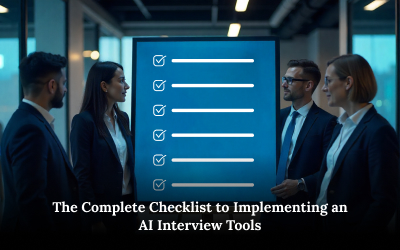
Discover Niyuk. Experience effortless screening and assessments. Book A Demo There are over 60% companies leveraging AI implementation in recruitment and hiring processes this year. A major shift has taken place from manual to AI interview platform. Many AI Interview tools are making life easy for HR recruiters. HR tech integration connects your AI hiring tools smoothly with current running systems. Direct switchover to AI without any set groundwork and structure will create a mess. A pilot test offers you a chance to check the tool’s impact and customize it to your organization’s culture and technology landscape. Niyuk is the most trending AI interview platform available today. Setting up interview automation simplifies your initial screening processes. Niyuk offers a smarter way to handle initial job interviews, saving recruiters a lot of time – 60-70% less effort in those earlier stages. It delivers the same and fair experience to each candidate, raising the same questions and their objective assessment. This means you may search the right people, suitable for the job without trusting on manual screening only. Actually, Niyuk frees up your team from all repetitive tasks, making them focus on building, developing real connections and creating intelligent hiring choices. In this blog article, we provide a 10-point beginner’s complete checklist, a simplified roadmap for HR leaders to pilot their first AI hiring tool with assurance. This approach guarantees that you achieve quantifiable outcomes, leadership trust, and momentum for full-scale implementation, from setting SMART goals to iterating based on actual feedback. An interview automation checklist directs a perfect success roadmap. Transform Your Hiring Process Leverage an advanced AI Interview Platform to find your perfect candidate easily Contact Us Step 1: Outline Plain Objectives Action Plan: find 2–3 SMART goals, like reducing screening time with 30%, boosting recruiter satisfaction scores with 20%, or raising candidate diversification feature by 15%. Incorporating goals like Specific, Measurable, Achievable, Relevant, and Time‑bound (SMART) take along internal teams and set ups a certain checking structure. Importance: objectives direct vendor selection, pilot(trial) scope, with KPI tracking. Without them, it’s tough to prove value-to-scale. Step 2: Secure Executive & HR Buy-In Action plan: give a reworked pilot(trial) proposal to main users, CHRO, CFO, IT, and Legal with distinct KPIs, timelines, and risk catering plans (e.g., data privacy and ROI vision). Facilitate single page summary highlighting expected benefits and budget requisites. Importance: Executive sponsorship assures that you have the required support budget, way to systems, and executive oversight vital for pilot success. Step 3: Assemble Your Pilot Team Action plan: Compose a cross-functional steering group with: HR managers and recruiters Talent acquisition specialists IT or systems integrator Data/privacy officer (for GDPR/CCPA compliance) An HR “AI champion” to lead adoption Importance: This balanced team mixes recruitment needs, technical possibility, compliance oversight, and internal advocacy, making sure a seamless pilot journey. Experience unbiased, efficient candidate screening with our intelligent AI Interviewer Get Your New AI Interview Platform Talk to Our Expert Step 4: Select Use Cases & Roles Action plan: Select 1–2 use cases like high-volume customer service roles or early-career technical positions, as your pilot entrusts. Importance: A stiff scope helps isolate variables, streamline workflows, and produce rapid learning. Start with non‑executive roles to lessen risk. A focused pilot skips complications, come from trying to implement across 50 roles from the very first day. Step 5: Define Success Metrics Action plan: Select KPIs, such as the applicant drop-off rate, the time to screen drop off, the net promoter score (NPS) from recruiters, and the relationship between AI scores and recruiter checks. Both quantitative and qualitative data, such as recruiter comments, should be included in your pilot dashboard. Importance: Predefined KPIs support you to judge pilot success objectively and set on scalability. Step 6: Prepare Your Data & Integration Action plan: Clean candidate data for consistency and set integration channels via your ATS or other HR systems. Make consent for capture and data retention matching with GDPR/CCPA. Run a small test import of trial data to verify the syncing flow and field mapping. Importance: Seamless, secure data integration avoids errors, safeguards candidate privacy, and retains operational continuity. A key mistake to avoid skipping rough(trial) data testing. You’ll discover mismatches soon, like mis formatted dates or incompatible scoring fields, saving hours of repairing later. Step 7: Configure & Customize the AI Tool Action plan: Upload your competency framework into the tool. Set up async interview questions (video, avatar, or chatbot style) and declare structured scoring headings with thresholds. Use vendor templates as an initial point but customize them to reflect your company’s culture and role expectations. Importance: Out-of-the-box templates hardly fit all. Customising ensures that every element aligns with your hiring requirements and brand identity, from language to score logic. Pro Tip: You can compare performance and candidate feedback with pilot having two interview sets, one exact vendor variant and one tailored variant. Step 8: Train Users & Communicate Action plan: Schedule a half-day meeting for hiring managers, recruiters. Get along with live walkthroughs, role-play reply to reviews, and Q & A. Share quick reference materials and record a voice-over of 10 minutes “how-to” demo. Importance: Familiarity is the catalyst for adoption. HR teams mainly prefer to use this tool, give exceptional or outstanding feedback, and depends on AI-driven insights upon it’s use. Step 9: Launch Pilot & Monitor Closely Action plan: Go live with pilot roles. Monitor key metrics, completion rates, average reply length, and candidate drop-offs on daily or weekly basis. Deploy a standing 30-minute check-in to review dashboard fluctuations and qualitative feedback of candidate. Importance: Early alerts correct or restrict your increasing mistakes. Missed queries? Twist the instructions. Low completion? Adjust alerts or question count. Real-time visibility keeps process on and assures for a smooth rollout. Step 10: Collect Feedback & Iterate Action plan: At the pilot end, survey recruiters and candidates using brief NPS questions (e.g., “Would you refer this experience?”). Connect surveys with AI data review, looking at confidence scores, declining patterns, or flagged bias trends. Utilise
The Ultimate Guide to Choosing an AI Recruitment Platform in 2025
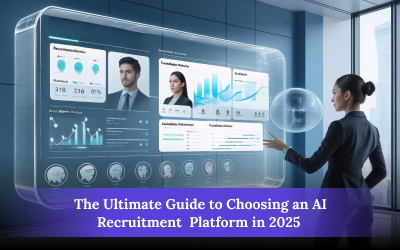
Discover Niyuk. Experience effortless screening and assessments. Book A Demo AI is taking over every aspect of life and work. Recruitment with AI is no more a daydream. AI recruitment platform is the perfect solution for rapid and effective hiring for a business in 2025. An AI recruitment platform uses machine learning and predictive analytics to search ideal candidates, simplifying the initial hiring stages. Artificial intelligence (AI) is contributing a lion’s share to recruitment teams by offering the benefits like efficiency, personalization, and data-informed decision making. As per the Gartner report, 76% of businesses has assured that their organizations will go for AI technology within the next year to sustain in the market competition. In addition to improving the interaction between humans and technology, AI has changed the HR function in terms of luring, enlisting, and keeping talent. People in today’s workforce are beginning to understand AI’s potential, but talks about how to use AI-powered tech in hiring can differ even among experienced HR pros. The 2025 recruitment software guide highlights the increasing AI dominance and automation in hiring. It focusses the importance of data-driven decision-making, personalized candidate experiences, and strong integration capabilities. The guide will likely focus on solutions prioritizing ethical AI use, diversity and inclusion, and measurable improvements in hiring efficiency, quality. Through this guide, we’re working on the complexity from the equation, incorporating clarity to the AI role. AI gets involved in recruiting activities and giving straight information on AI’s favourable impact on HR, TA teams. This guide will help you: Utilize AI benefits and mitigate key recruiting challenges Best understand AI and its effects on talent recruitment Explore necessary AI-powered technology which will make life easier for candidates and recruiters Preview the future of what AI restores for recruiting What is AI for Recruiting? AI recruiting is the process of incorporating artificial intelligence (AI) to augment and automate manual, redundant tasks while offering individualization and data analytics throughout the hiring process. AI is the science of training machines to pretend human intelligence and make systems that can perform tasks normally done by a human brain. For instance, various industries have applied AI to process big size data to improve capability, accuracy level and productivity. In simple words, AI uses automation but extends intelligence – learning, reasoning, and adapting – to resolve tedious, redundant problems with quality results. AI recruitment means using artificial intelligence tech to make many parts of the hiring process better and more automatic. You can apply similar ways to make things automatic and get the same good results in hiring for tasks that happen over and over in big numbers like finding candidates checking them out, setting up meetings, and doing interviews. AI- technology is designed to speed up time-taking manual processes, so HR recruiters can emphasize on more valued human-tasks. AI is not here to replace human recruiters but to help them to optimise their results in less time and ultimately do remarkable cost savings. Recruiting AI allows talent acquisition teams to explore passive candidates and share data-driven insights guiding for data -driven decision-making and best results, like hiring quality. This helps Ai hiring assistants with AI recruiting tools to go for the right talent for the perfect role at the best suitable time. Are you ready to revolutionize your talent acquisition? Explore how AI recruitment platforms and recruitment SaaS solutions can transform your hiring strategy. Contact Us Importance of AI in Recruiting It is quite clear by today that, artificial intelligence in hiring processes improve efficiency via intelligence and automation of complex tasks making recruitment teams available up to focus more on strategic, big-picture goals. When you get AI right, it mixes into the background and is available for support. It’s equally important to refer that these tools must be considered as an AI recruiting assistant/advisor to recruiters. It assists workmen during the recruitment process. As recruiting AI is taking the leading role now and the market is going for more and more competitive in nature, Talent Acquisition leaders must consider integrating AI-powered recruiting software to get suit in an environment where fast working and smartness is a requisite. AI tools permit high-level personalization & data insights to produce better recruiting outcomes. AI as a Strategic Partner in Proactive Recruitment AI’s real spirit lies in its ability to makeover recruitment from a reactive process to a proactive one. With predictive analytics capabilities, AI can locate high-potential candidates also before they apply, supporting recruiters connect the high-class talent much early and more logically. Now, the life of recruiter has changed. They need not to wait for the right CV to come to them, in fact, they can easily locate the best fit candidate for their requirements and get connected with him via the data-driven insights. This reduces the hiring cost, valuable process time and delivering nice candidate experiences. 1. AI + Automation: Work Smarter, Not Harder Recruiters are consistently handling the pressure to act more. With AI-powered tools it is very much possible. AI release up recruitment teams to focus on strategic goals by automating their routine, time taking repetitive tasks. For example: Sourcing: AI-powered matching and scoring abilities identify the best-fit candidates with automation. Screening: Candidates are ranked because of a predefined criteria to simplify shortlisting. Scheduling: AI chatbots and calendar integrations handle interviews coordination efficiently. AI Automation is a game changer for recruiters, spending more than 30 hours per week on only sourcing activity. 2. AI + Personalization: Delivering Tailored Talent ExperienceS Outstanding talent experiences start with relevance. AI allows personalization throughout the complete talent lifecycle: Candidates get customized job recommendations and content on the basis of their profile, search behaviour, and preferences Employees benefit from AI-driven career path, alumni network connections, and internal shift opportunities Recruiters gain individual level talent pipelines with guided matches based on compatibility and historical success This type of personalization level elevates engagement, build loyalty, and supports talent promptly via the funnel. 3. AI + Data Insights: Better Information, Better Decisions Talent leaders are
AI Recruitment vs Traditional Hiring: What’s Right for Your Business?
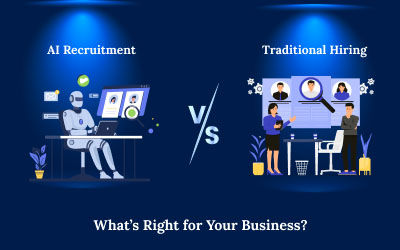
Discover Niyuk. Experience effortless screening and assessments. Book A Demo Every successful organisation’s backbone is a right recruitment. The recruitment process has been transforming a lot over some years, from conventional to now AI is taking over and playing a vital role in talent acquisition for businesses. As AI technology becoming more useful and spreading widely, Now, Hr recruiters and Hr managers have the choice to select between traditional recruitment process or AI-driven hiring process. Now we have, AI hiring software available with us. In this blog, we’ll dive deep into the differences between traditional(conventional) and AI recruitment, rolling out in detail, how AI is transforming the hiring process and helping mitigating challenges in talent acquisition. We will also highlight the prospective challenges AI brings, so you can make a data-driven decision about integrating these tools into your recruitment strategy. The Way Traditional Recruitment Process Works Manual vs Automated Hiring This is a pure manual recruitment process. It begins with job openings being advertised via many channels like job boards, social media, or word of mouth. After this, Recruiters can review resumes, shortlist candidates, and conduct interviews, all these steps are time-consuming and sometimes irregular. For recruitment agencies and HR department, this method relies mainly on human decision. While this enables for personal interactions and customised assessments, it also has its limitations in terms of speed, scalability, and objectivity. Challenges with Regular Recruitment Regular or traditional recruitment has been there for more period now as the go-to method, but it is having several pain points: Time-Saving: Manual screening more than thousands of resumes manually, conducting interviews, and performing admin tasks will make the recruitment process sluggish and non-effective. Subjectivity and Bias: Also, the most genuine recruiters may unintentionally allow unconscious bias to affect their hiring decisions. This will result in a lack of variety or unfair edge for some candidates. Limited Candidate Pool: Conventional methods mainly depend on job boards or individual networks, which normally limit the talent pool, specifically when looking for very niche or global candidates. Inconsistency: Each recruiter would assess resumes and conduct interviews separately, which leads to non-synchronisation in the recruitment process, making it complex to smart comparison of candidates. Redefining the Recruitment Journey in AI Way AI recruitment tools are completely changing over how talent is sourced, screened, and hired. By automating redundant tasks and enhancing decision-making processes, AI is resolving many issues that troubled in conventional methods. Niyuk is an AI-driven HR hiring platform designed to support recruiters make smart decisions in record time. Niyuk does the smart scanning of over 7 million profiles and match candidates to the right job based on their skills, experience, and personal choices. Here’s how Niyuk improves recruitment: Fast Candidate ShortlistingNiyuk helps you shortlist candidates in less than 24 seconds, saving your measurable time in the hiring process. AI Video InterviewsWith built-in AI video interview feature, Niyuk assures a simplified interview process which is rapid and more comfortable for both sides- recruiters as well as candidates. Multilingual CapabilitiesAvailable in more than 10 languages, Niyuk opens recruitment global level opportunities, assuring that talent can be resourced from anywhere, without any language barriers. Customizable Job DescriptionsNiyuk enables you to make individualised job descriptions, making sure about the right fit for every role.By using AI, Niyuk helps resolve the challenges those have conventionally slowed down the recruitment process, giving a fast, more efficient, and almost 0 biased approach to talent acquisition. Unlock efficiency with cutting-edge recruitment automation tools. See why AI hiring software comparison consistently points to AI’s advantages. Contact Us Challenges with AI in Recruitment Even though AI has many advantages, there are certain challenges to cope up with as follows: Over-Dependency on AlgorithmsOne of the risks of AI recruitment is that over-dependency on algorithms may lead to mechanical decision-making. While AI can identify patterns, it may ignore the human qualities that make candidates a suitable fir to the culture or may bring distinct strengths to a role. Human Factor in HiringAlso, AI tools can make hiring a lot simple, they just can’t put in the personal touch and the way relationships are built in traditional recruitment process.Some job aspirants would feel a bit put off by a process that feels too impersonal, or they might miss out on some valuable insights which only a recruiter can share during a real human conversation. Initial Cost to BearStarting with AI tools means investment in new technology and ensuring everyone knows the way to use it. For small companies or recruitment agencies, that initial cost can feel like a big block. Anyhow, when you look at the big picture, the long-term benefits – like closing roles faster and finding much better candidate matches – normally make that upfront investment worthy. Base of Good DataAI is only as smart as the data-based information it captures from. If the data it’s trained on is biased or incomplete, the AI tool might end up giving recommendations, that are either not correct or unfair. So, making sure that the data you feed into the AI is top-quality and diverse is required for really getting the best out of it in recruitment. Traditional Hiring vs AI Recruitment: A Comparison So, find below given quick comparison between traditional hiring and AI recruitment: Factor Traditional Hiring AI Recruitment Speed Slow, with manual steps and delays. Fast, screening automation and scheduling. Scalability Limits on how much a recruiter can handle. Scales easily, handles high volumes of candidates. Bias Can be influenced by unconscious biases. Reduces bias, works on data and skills. Personal Touch Develops strong relationships, entrust on fit. Less personal, but fast and more efficient. Cost Lower upfront cost, but labour more. Higher initial cost but saves time and money in long-term. Consistency Variable between recruiters, can be inconsistent. Regular, data-driven decisions. Efficiency Slow and admin-heavy, with high manual work. Simplified and automated, time saving. Both traditional or conventional recruitment and AI-powered recruitment have their doubtless existence in the hiring process. As AI delivers efficiency, speed,