Hiring in Healthcare | Using AI with Ethical Practices

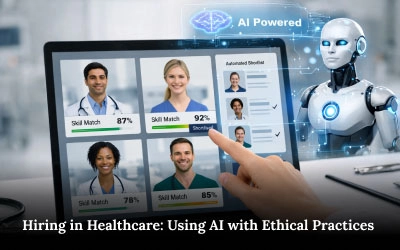
Discover Niyuk. Experience effortless screening and assessments. Book A Demo Artificial Intelligence is transforming the way – we hire in healthcare. Smart recruiting tools excel the process, support in finding the best professionals, and save valuable time for each one involved. As we adopt and rely on AI much widely, we must watch out and attain the concerns around transparency and ethics. Hiring in healthcare is the upcoming talk of the AI edge today. In this blog article, we are elaborating about ethics must be followed in AI-based hiring in the healthcare industry. Simplify hiring in healthcare with smart recruiting tools Try Niyuk to deliver results Book a Demo Challenges in Healthcare Recruitment Ethics As per AI healthcare data, while AI improves efficiency, it also comes with complex ethical risks that recruiters must browse carefully. 1. AI Bias in Recruitment AI algorithms trains from historical data, which mainly carries human biases. If earlier hiring practices is having some demographics, AI can improvise these types of biases. AI helps pick employees based on what happened in the past might like people from some backgrounds more than others. It might also say no to good people because of things that do not matter like if they are a man or a woman what country their family is, from or where they live. This may be unintentional, but careful picking of employee is a must. Unchecked bias in AI-driven hiring can establish imbalances and adjust on patient care quality in the long run. Collaboration with healthcare analytics consulting experts could help organizations in audit of algorithms, identify bias, and make sure for more equitable recruitment end results. 2. No Explainability and Transparency Giving candidates with clear explanations behind decisions improves transparency. But many AI hiring tools are “black boxes”, driven by tough algorithms, making it difficult for recruiters to explain decisions. Black boxes are AI systems assisting organizations in decision-making via deep learning. Anyhow, there are no clear explanations for those tough decisions they produce ever. To improve transparency, organizations might think for using AI model training services incorporating explainability features. Without transparency and explainability, organizations take risk for losing trust and could face legal challenges, if candidates claim the decisions to be not fair. 3. No Data Privacy and Consent AI tools need prospective amounts of personal and professional data about applicants. In the medical arena, where privacy is important, it is a ‘must’ to handle sensitive information responsibly. Recruiters have to collect candidate data with consent. You can ensure that it is stored safely and use it entirely for the intended hiring targets. Mishandling could discrete privacy laws and ethical standards. 4. Preventive in Accountability and Human Oversight Despite of how latest technology has become, AI must serve as a tool to support human decision-making in hiring. It must be full of ethical standards. And it is affirmative towards human intervention to check is it fair or not, breaching any law etc. Depending much on automation leads to a hiring experience lacking empathy and accountability, which are tough elements in the sector like healthcare. That’s why various organizations select to allies with healthcare-focused IT consultants, who help to make sure for accountability by designing governance frameworks, tracking AI performance, and setting up clear expansion of processes when automated decisions need manual review. Past Hiring Trends in Healthcare Before AI entry, hiring in healthcare replied heavily on human efforts, mostly taking for long hiring timelines and biases. The conventional hiring methods are having: Human Based Resume Screening: Recruiters had to filter via hundreds of resumes manually, looking for the correct skills, certifications, and experience. This process was slow and frequent, slowing down the hiring for required job positions. Subjective Assessments: Before AI, healthcare recruiters checked candidates with manual medication-calculation quizzes, paper skills tests, scenario-based panel interviews, and verbal reference checking. Limited Talent Pools: Employers mainly prefer their local job ads, professional contacts, and references. This gave them a little candidates pool, restricting their access to dynamic, quality candidates. Slow Hiring Timelines: Hiring for crucial medical roles would take months, sifting via endless no. of resumes, multiple interviews rounds, checking credentials, and slow communication. The lengthy process results in staff shortages. Human Compliance and Credentials: Even though a candidate accepted an offer, the HR team still need to incur days contacting state boards via phone or email to check for licenses and certifications. This is a slow, fragmented process which is prone to error and stretches for weeks, months. Hiring in Healthcare in the AI Age Artificial Intelligence has drastically improved healthcare recruitment, dropping down time-to-hire from various weeks to only some days. With the integration of AI in hiring, the landscape has changed remarkably, making processes more effective and easier. Automated Resume Screening: In some seconds, AI screening tools analyse resumes, filter candidates whose skills, credentials meet the role’s requirements while indicating non-matches. Data-Based Assessments: AI-driven platforms present virtual clinical conditions, and structured video interviews and medication calculation tests. Natural-language processing and behavioural analytics assess the candidate’s clinical judgment and teamwork verses evidence-based benchmarks. Such objective dashboards, powered by AI in healthcare, let recruiters judge applicants frequently and identify the talent mainly to boost up in patient care. Hyped Hiring Processes: Automatic scheduling, communication, and follow-ups support recruiters to move candidates fast via the hiring funnel. This prevents delay and non-availability of staff causing for the bad patient care. BoostedCompliance and Credential Verification:AI verification systems finely check licenses, certifications, and background details. This regulate the hiring process while making sure that rules are followed. Bias Reduction: Advanced AI tools synthesis on suitable skills and qualifications, not personal characteristics, reducing bias. Anyhow, regular updates and checks are always needed to ensure transparency. While no tool is perfect, well-trained AI tools help reduce unfair judgment. Overcome challenges in healthcare recruitment with AI Use practical AI in hiring made for actual need Start with Niyuk Third-Party Vendor’s Role in AI-Based Healthcare Solutions Outside vendors, adding AI technology providers, talent-acquisition SaaS companies, recruitment process outsourcing (RPO) firms, and data analytics experts, play a defining role in enabling AI adoption in healthcare recruitment. Their key responsibilities are: 1. AI Development and Integration Integrating customised AI development services automates data-heavy tasks like reading scans, highlighting high-risk patients, and organizing records, so clinicians get vital information fast. It also has treatment suggestions and real time outcome predictions helping doctors to make fast and accurate decisions and improve patient care. As AI excelling healthcare decisions, now accelerating cybersecurity by automation of threats, highlighting risks, and allowing fast reply. With the help of healthcare IT consulting services, the organizations can deploy these AI-driven tools into their current infrastructure. Health specialists use Electronic medical record (EMR software), Electronic health records, imaging machines, and telemedicine apps. This resolves the query- Why to develop a Telemedicine App. These tools may read scans, skim clinical notes, predict patient outcomes, and suggest possible diagnoses, all powered by latest neural-network models. Advanced systems made on a reinforcement learning environment allow continuous learning and optimization, enabling AI models to adapt based on real-world performance and feedback. 2. Data Collection Third-party vendors give tools for data collection, aggregation, and normalization. These can be incorporated into wearable devices, medical devices, attendant medicine software, and patient records. These tools help hospitals or clinics to gather and structure many data sources to use in AI analysis, while also allowing features like patient appointment text reminders to improve
Time –to-Hire: All Vital Insights for Your Recruitment Cycle in 2026

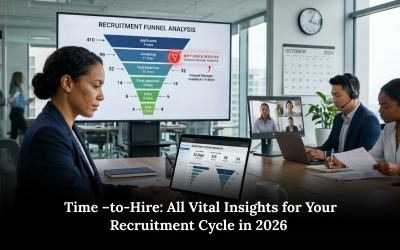
Discover Niyuk. Experience effortless screening and assessments. Book A Demo In 2026, The talent acquisition teams are experiencing the deep challenges of hiring the right resources. Many efforts of the team, the concern recruiter’s efforts to locate the right fit candidate for some few weeks’ time-to-hire ends on the selection ending with an offer email to the candidate. Th real twist is here. The offer receives reply from the chosen one that he has accepted some another offer. So, this is a complete loss of time-to-Hire and efforts as well. Time-to-hire has become the biggest critical parameter in HR arena today. One must confess that in 2026, time-to-hire is the main success factor or a man liability for any organisation. This defines the agility of the business in broader aspect. Top Talent Moves Fast Optimize your time-to-hire with error-free evaluations Use Niyuk Today Why Is Time-to-Hire Vital for Candidate Experience and Retention? Let us consider a genuine case here. A top-level AI expert or a high-performing Sales manager is going for a job hunt. Then they will look not only for a lucrative paycheque but also for a decent work culture. In case of a slow hiring process, what it conveys to the candidate? “We are indecisive.” “We don’t value your time.” “Our internal communication is probably a mess.” The best talent is off the market in 10 days or less in 2026. If your process takes up 3 weeks of “internal review” without any schedule for a second interview, you aren’t as it were being “thorough”, you are being undetectable. A fast time-to-hire makes a “Halo Effect.” It explains the candidate, “This company is well organized, decisive, and they want me.” That feeling carries over at least for first 3 months the job, directly impacting retention. How to Calculate Time-to-Hire: Formula and Best Practices To sort out your speed, you need a gut feeling free foundation. The seasoned approach is to search for the average across all roles, but also the median to make sure for one difficult executive role doesn’t twist or tweak the data for your high-volume hiring. 1. The Basic Time-to-Hire Formula Time to Hire = Day of Offer Acknowledgement – Day of Candidate Application Pro-Level Measurement Don’t just monitor the total days. Monitor the “Milestone Velocity”: Application to Screen: (Goal: < 48 hours) Screen to Interview 1: (Goal: < 3 days) Interview 1 to Final Offer: (Goal: < 7 days) By its further break up, you prevent guessing and start knowing which “lap” of the race is slowing down your process. 2. Industry Benchmarks: Actual vs. Expectation Some regular talks are: “We are a law firm, we have to be slow.” or “We’re a technical startup, we are naturally fast.” While industry works for a role, the “benchmark” is mostly an excuse for inefficiency. 3. Global Benchmarks of 2026 Industry Avg. Time-to-Hire The “Danger Zone” Technology/IT 20-33 Days > 40 Days Finance/Insurance 44 Days > 50 Days Healthcare 35 Days > 50 Days Retail/Hospitality 14-18 Days > 21 Days Professional Services 28 Days > 35 Days Global average time-to-hire is 44 days for all industries. Top candidates go off market in 10 days. Don’t focus for the “average.” Take target to be 20% faster than your direct competitor. If the firm across the street hires in 28 days, and you hire in 22 days, you will always get the edge. The Financial Effect: Calculating the Actual Cost of a Vacant Position Many companies monitor the hiring cost (ads, software, agency fees). Less companies monitor the cost of not hiring. Let’s work out some basic calculation which normally attracts the CFO’s attention. We use the Vacancy Cost Formula: If an employee makes $200,000 in revenue per year, and that role remains vacant for 40 days, you aren’t “saving” on their salary. You are at a loss of approximately $30,769 in unrealized value. And it is the direct revenue. It doesn’t account for: 1. The Burnout Trap: Why “Covering” for a Vacancy is a Slow Poison We normally tell ourselves, “The team is growing up,” as if that’s a long-term strategy. You can stretch this for some long period, but eventually it is going to break at some point of time. The “Invisible” Workload: When a seat remains vacant for 40 or 60 days, your top teammates don’t just take on additional tasks; they take on more mental load. They are context-switching regularly. This takes to “Decision Error.” Secondary Turnover: This is the furious part for any manager. Your “star” employees work more for that pending position. When they start feeling like they are doing double jobs for one salary, they do not complain; they only update their profile for new job. Suddenly, your “one vacancy” issue turns into a “two resignation” crisis. The Quality Slide: It’s a full erosion. You don’t notice it on day six, but by day thirty first, the “good ” standard becomes the new normal. Your culture shifts from innovation to survival. 2. The Brand Tax: Why Ghosting is a Financial Liability In 2026, your “Employer Brand” isn’t what your website shows; but it’s what the unhappy candidate says in a private Slack community or a Glassdoor review. The Costing of “Stale” Jobs: If a candidate watches a job post for almost three months, he does not appreciate that but finds that something is uneven with the post. High-quality talent will not even click “Apply.” This keeps you with a pool of desperate candidates, which further improves the risk for a “bad hire” (the only thing more costly than an empty seat). The LinkedIn “Whisper Network”: Candidates whisper. If your hiring process is slow or if people feel “ghosted” because the team was very busy “covering” the vacancy to respond, that news uncovers. You end up with a “Reputation Damage.”This means to hire the same talent next year; you’ll have to offer 10% to 15% more in salary mostly just to convince them to take the risk on a brand they assume as disorganized. The Marketing Conflict: Imagine your company incurs thousands on marketing to look “latest and fast” to customers, while your HR process looks “slow and ancient” to candidates. That loss of connection kills your credibility. Today’s candidate is tomorrow’s customer. Reasons of Hiring Delays and Ways to Fix Them Those were the days when interviews were long lasting. Nowadays, stop gaps between interviews rounds or interviews are causing major delays. Let us discuss them with their solutions here. 1. The Resume Black Hole It takes 5 days for a recruiter to refer at a new application. By that time, the candidate has applied to 10 other places. Solution: Use AI tools like Niyuk.ai to flag top-applicants promptly. 2. The Scheduling Issues Scheduling is a tough task really. To get 30-minute time slot from 3 decision makers is a mighty task to schedule the interview, even with the online mode. Solution: Give managers non- negotiable “Interview Blocks” in their calendar. 3. The “One More Person” Condition The hiring manager takes decision at the last moment that “Finance Head” should also meet the candidate. Solution: Clarify the interview panel even before the job posting. 4. The Indecisive Offer Waiting for budget re-approval or a prolonged budget re-approval, after the candidate has already been chosen. Solution: Do not post a job if the budget is not 100% locked. Strategies to Lower Down
Niyuk: The Best Hiring Tool to Cut Recruitment Cost

Discover Niyuk. Experience effortless screening and assessments. Book A Demo In today’s dynamic talent market, recruitment plays a significant role in driving the growth and success of modern organisations. Anyhow, the hiring tool can have a remarkable impact on a company’s operations and entire human resources budget as well. From advertising of job openings to onboarding new hires, these costs can rapidly add up, certainly when recruitment processes are not to the mark. We have the solution i.e. Niyuk for the same. In today’s era of smart recruitment software, businesses have the tools to simplify the hiring process, boost decision-making, and dramatically decline recruitment costs. With the use of AI-based screening, automated communication, and centralised applicant tracking, businesses can lower manual effort, boost accuracy, and really cut down non-required expenses. This innovative approach makes sure for companies not only to save money but also improve the entire recruitment experience. What Does Recruitment Cost Means? Recruitment cost is the total cost required for attracting, selecting, and hiring candidates during the full recruitment or hiring process. This covers a wide range of activities and resources contributing to the hiring process, whether they are internal / external to the organisation. Recruitment costs are generally categorised into 2 types: 1. Direct Costs These are the visible, immediate expenses directly relative to a role closure. They cover up job board fees, recruitment agency charges, advertising costs for jobs, background checking cost, travel reimbursements for candidates, and employee referral bonuses. They are typically easy to track and quantify. 2. Indirect Costs These are the less obvious but equally remarkable costs arising from the recruitment process. Indirect costs encompass lost or missed productivity because of the vacant positions, training activities, onboarding of new employees, time shared by internal HR staff on resume screening and candidate interviews and increased expenses due to a bad (or poor or non-deserving) hire. Effective workforce planning and budget control are dependent on monitoring and reducing these types of hiring expenditures. Realizing the average recruitment cost per hire enables organisations to set benchmark and strategize cost-effective recruitment working. Affordable AI-Driven Recruitment Implement our AI recruitment software to optimize your AI recruitment process. Book Demo Today What Is the Importance of Recruitment Cost? Recruitment is not only about recruiting candidates for the open vacancies. It’s a strategic function which may drastically affect your organisation’s budget and performance, as well. Knowing about the critical importance of recruitment cost supports you to take up best possible hiring decisions, smart resource management, and guide long-term business growth. Here’s why it’s vital: 1. Impact on the Overall HR Budget Recruitment may represent a large portion of an organisation’s HR cost. Advertising job roles, using paid services of recruitment agencies, running background checks, and onboarding all come at a cost. When hiring is not sufficient or happening again due to poor retention, these costs grow at high rate, leaving less budget for other key HR initiatives like employee engagement, training, and development programmes. 2. Influence on Time-to-Hire and Quality-of-Hire Recruitment cost directly effects on how fast you get in the fresh talent. The more time it requires the more hiring cost. This also increase burden on teams as well as more time wastage for the same. On the other hand, accelerating the process to cut costs can damage the quality of the hire, this leads to mismatched candidates and eventual turnover. A balanced hiring strategy is a key to cost control without doing compromise on the quality of talent. 3. Hidden Costs of Poor Hiring Decisions Not all recruitment expenses are well enough. Bad hiring decisions may result in hidden costs i.e. dropped productivity, low employee morale, increased supervision responsibilities, and extra amount of time spent managing performance issues. If the placed candidate leaves, the re-hiring and re-training again starts the recruitment journey or cycle, expanding the budget and juggling with team stability. All details about the applicant tracking system are not necessarily right. Some of them are myths. Let us discuss them here one after the other. What Are the Reasons of Added Recruitment Costs? If your average recruitment cost per hire feels unsustainably high, the following factors could be anticipating: Humanised hiring workflows: Depending on spreadsheets, emails, and data entry slows down the process and expands the risk of error. Lack of automation: Without collaborative tools, team’s experiences delays and miscommunication. Poor candidate experience: Long lasting processes and precise communication leading to high drop-out rates. High employee transit: A rushed hiring process mostly leading to poor matches and early exits. Heavy dependence on recruitment agencies: While they can be helpful, agencies may remarkably improve your costs if used as your primary process. Limited recruitment insights: Inadequate, incompitent data makes it tough to measure success or find the real bottlenecks, resulting in bad hiring decisions. What Function Does Recruitment Software Serve in Hiring? Recruitment software is becoming a game changer. It’s a digital platform crafted to manage and maximise every stage of the hiring process. Either purchased as an outperformed solution or made by a custom development company to meet certain organisational needs, recruitment software goes a step ahead by incorporating artificial intelligence, automation, and advanced analytics to maximise hiring efficiency. As per the 2025 HR Tech Report, businesses going with AI recruitment software have seen a 35% drop in the cost per hire and a 42% enhancement in time to fill. Key Features are: AI-powered candidate screening to grab top talent rapidly and drop down the manual workload. Automated communication for a genuine, engaging candidate experience. Centralised applicant tracking system to offer team collaboration and boost visibility Customization-friendly analytics dashboards to monitor real-time key recruitment metrics. Simpler integration with job boards, social media platforms for a bigger outreach. Inside compliance tools to meet data protection regulations such as GDPR How to Have the Right Recruitment Software? Getting the right recruitment software is tedious for developing a timely and cost-effective hiring process. The factors need to be considered. Here are key considerations to support your decision to go for a perfect recruitment software: Scalability and CustomisationOpt for a solution growing with your business and gives flexible customization, whether it’s collecting workflows or managing raised hiring volume. User-Friendly Interface and SupportAn easy, intuitive design supports your team to get started quickly. Sound customer support, training resources are very important for long-term success. Data Protection Laws (for Compliance)Be alerted to comply the software with the General Data Protection Regulation (GDPR) regulations. See features i.e. user access restrictions, data storage security, and compliance tools. Reviews from Users and Trial (Evaluation) PeriodsTry out the free trials to check and refer platform’s features and usability benefit. Check the reviews from the users to know real-world performance, support level, and reliability also. Your Search for the Best AI Hiring Tool Ends Here. Make the smart investment in AI hiring this week. Calculate Your Savings How Does Recruitment Software Aid in Lowering Recruitment Expenses? Recruitment software is made to ease the full hiring process, delivering remarkable cost savings across various areas of your recruitment strategy. Refer these tools here, which can directly drop down your recruitment costs: 1. Refining the Hiring Process Automation accelerates key stages, like candidate screening, interview scheduling, and required communication. By reducing delays, recruitment software conserves the time-to-hire, assuring about quick onboarding and lessen productivity loss. 2. Avoiding Dependencies on External Agencies Recruitment software easily permits or enables staff members to handle candidate sourcing, their resumes screening, and communication with them,
How Automated Interview Scheduling Changed Manual Hiring Back-and-Forth

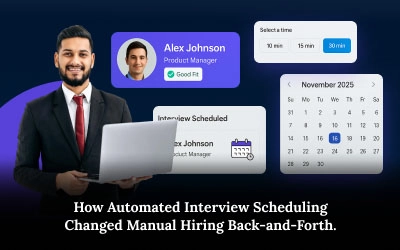
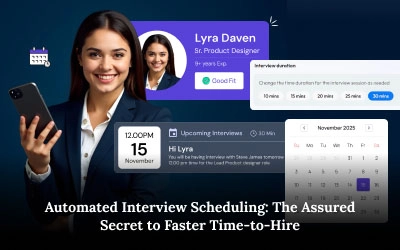
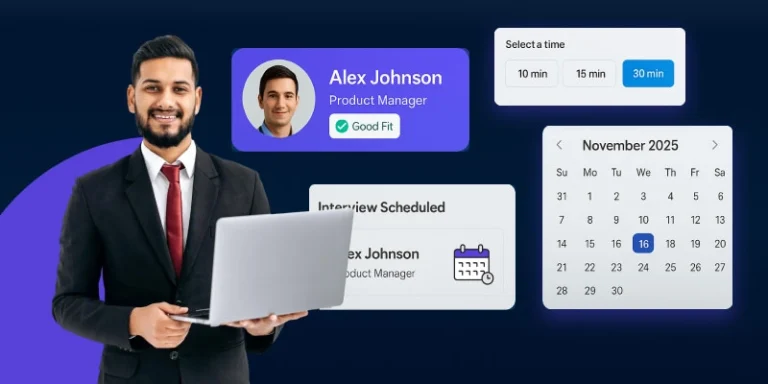
Discover Niyuk. Experience effortless screening and assessments. Book A Demo Manual interview scheduling for the headhunt of the ever-best talent for every required role. But manual scheduling has a lot of flaws like delays, inefficiencies and loss of opportunities to grab top talent. For HR professionals and recruitment managers, interview scheduling is not only time –taking but also puts on extra administrative burden and causing scheduling conflicts. This ultimately, damages the candidate satisfaction. Automated Interview Scheduling is the master key for all such HR people to save their valuable time and efforts. Niyuk comes up with some transforming approach about interview scheduling. It makes life easy for the recruiters by simplifying the entire process from resume screening to assessment of the candidate with the help of AI technology. With the use of Niyuk, HR recruiters not only able to simplify the operations but also drops down time-to-hire, saves remarkable work time and efforts, to divert themselves on more priority tasks. In this important blog article, we are going to discuss about the transformation of conventional manual interview scheduling over automated interview scheduling. Let us unfold this discussion in following sections here. The Bottlenecks in Manual Interview Scheduling Manual interview scheduling is the main hurdle in many organisations today. HR professionals and recruiters use to work for long lasting hours just in mailing candidates for discussing the suitable interview schedules, arranging their interview slots with the calendars and getting their confirmations after such hard efforts. This complex coordination mostly shows: Last-moment cancellations or no-shows due to lost interview chances Prolongness in candidate’s journey via the hiring process Double(multiple) bookings and scheduling hassles Negative candidate experiences due to inefficient communication Bulk workload on recruiter and administrative burden Such types of inefficiencies hamper HR resources and risk of top talent loss to active competitors. Our Automated Interview System Runs 24/7 Vetting skills for your team Start Automating Interviews Today with Niyuk! What is Automated Interview Scheduling and How it Functions? Automated Interview scheduling is a software solution removing humans from the calendar-coordination loop in recruitment process. It is a software allows candidates for self-schedule and reschedule interviews without recruiter’s intervening efforts, as per the industry analysts. It acts in below 4 things: Calendar sync in real-time The application synchs with Google or Outlook calendars and collects open and occupied time slots without considering event specifications. Mutual-availability engine The mutual-availability engine which compares the candidate’s time zone and the interviewer’s schedules to recommend only options that are comfortable for both parties. Self-service booking link Candidates get a branded URL or SMS that promptly updates all stakeholders’ calendars. Clever follow-ups and reminders SMS, emails are sent an hour before the call and 24 hours in advance. Benefits of Automated Interview Scheduling In actual, a timely shift from manual to intelligent interview scheduling gives more constructive benefits for HR staff, recruiters: 1. Recruiter Workload Interviews scheduling automation and prompt candidate communication makes recruiters free from routine, time taking administrative tasks, permitting them to focus more on strategic talent evaluation and engagement. 2. Higher Interview Completion Rates Automated reminders and multiple-channel communication options reduces no-show rates substantially, making sure for smooth hiring channels and fast decision making. 3. Accelerated Time-to-Hire Simplified scheduling increases candidate progress, consumes time effectively and giving edge to the HR people to close certain positions in today’s smart job market. 4. Enhanced Candidate Experience Gives flexibility to the candidates to plan their own interview schedules and set proactive reminders. This improves their satisfaction level up too much extent. These benefits directly impact recruitment results, making Niyuk as a strategic investment for HR leaders expecting important improvements in hiring efficiency and quality. Types of Automated Interview Scheduling Tools There are different types of automated interview scheduling tools are available. Every type comes with some unique features and benefits. Here are some popular types: 1. Calendar Integration Tools Calendar integration tools get integrated with your current calendar software, like Google Calendar or Outlook. These tools allow recruiters to share their availability status with candidates. Candidates can view, choice for their available interview time directly from the calendar of recruiter. Calendar integration tools are easy for use. They may save time by removing the need for dual-sided communication for a while or for a longer time than usual. Calendly is a popular calendar integration tool allowing recruiters to share their calendar availability and do changes in their booking page with their brand colours and logo. Candidates may select a convenient time slot for them, which gets added automatically to the recruiter’s calendar. This tool helps for auto reminders sending to candidates before the interview. 2. Chatbot Tools Such tools are based mainly on artificial intelligence (AI) technology to interact with candidates and schedule interviews. These tools answer basic queries, offer candidates feedback rapidly, and may help in simplifying the recruitment process. Chatbots can also help to deliver a better candidate experience by 24/7 availability and offering rapid and informative replies to candidates. 3. Interview Scheduling Platforms Interview scheduling platforms gives a centralized system for interview scheduling and hiring process management. These platforms offer features – automated reminders, confirmation status tracking, and scheduling data insights. They are especially useful for big sized organizations those need to manage multiple interviews across various hiring teams and locations. Well, Niyuk takes care about all such requirements for organisations as well as recruitment agencies. Selection of Right Automated Interview Scheduling Tool To select an automated interview scheduling tool, it’s crucial for considering many factors for making sure to pick a correct scheduling tool meeting required for your organization. Think about those features vital for the recruitment process. They may vary widely between various interview scheduling tools. So, it’s important to get a tool with features you are looking for. Suppose you schedule interviews frequently with candidates in various time zones, you may need to think a tool with a built-in time zone converter. And, if you are really managing a high-volume recruitment process, you can wish to look for a
Time to Hire: Are You Losing Top Talent?

Discover Niyuk. Experience effortless screening and assessments. Book A Demo In the race for pinnacle skills, pace may be your competitive area – however best if performance doesn’t come at the value of terrific hires. Time to hire is an important metric that influences no longer best the value-effectiveness of recruitment however also the agility and overall fulfilment of the enterprise. Hiring delays can result in lost productiveness, expanded workloads for present workforce, and neglected opportunities to onboard excessive-acting applicants who get hold of competing gives. At the same time, accelerating hiring strategies frequently dangers compromising the thoroughness and rigor had to make sure a sturdy cultural and talent suit. This anxiety between pace and pleasant has been a persistent struggle for HR teams worldwide. Striking the right balance can experience like strolling a tightrope – too slow, and top skills walks away; too fast, and costly hiring mistakes manifest. That is exactly wherein, Niyuk come into play imparting a present-day framework designed to empower recruiters to make quicker, smarter, and statistics-pushed hiring decisions with out compromising pleasant. Drop down your time-to-hire and find top talent faster. Real-time analytics and cost-effective recruitment strategies will elevate results Contact Us The True Cost of a Lengthy Hiring Process In the race for pinnacle skills, pace may be your competitive area – however best if performance doesn’t come at the value of terrific hires. Time to hire is an important metric that influences no longer best the value-effectiveness of recruitment however also the agility and overall fulfilment of the enterprise. Hiring delays can result in lost productiveness, expanded workloads for present workforce, and neglected opportunities to onboard excessive-acting applicants who get hold of competing gives. At the same time, accelerating hiring strategies frequently dangers compromising the thoroughness and rigor had to make sure a sturdy cultural and talent suit. This anxiety between pace and pleasant has been a persistent struggle for HR teams worldwide. Striking the right balance can experience like strolling a tightrope – too slow, and top skills walks away; too fast, and costly hiring mistakes manifest. That is exactly wherein, Niyuk come into play imparting a present-day framework designed to empower recruiters to make quicker, smarter, and statistics-pushed hiring decisions with out compromising pleasant. The True Cost of a Lengthy Hiring Process A long-lasting hiring process has a ripple effect via an organization. Beyond the risk of losing top- talented candidates, it can also: Damages Your Employer Brand: A negative candidate experience can take to poor reviews on platforms i.e. Glassdoor and LinkedIn, deterring future talent. Cost Increments: Each day a role remains vacant, your company loses the ultimate productivity. The costs related with an open position – from lost revenue to extra worked teammates – add up quickly. Hurt Team Morale: Current team members may become stressed by the extra workload, taking to burnout and decreased engagement. Strategies for AI-based Faster Hiring Process The base of a fast-hiring process is a strong, proactive approach. Let those right candidates must find you easily. 1. Enhance your Processes Make and Retain a Talent Pool: Always get engaged with past applicants, referrals, and candidates who were highly qualified but didn’t get selected.Use Customer Relationship Management (CRM) system for recruiters to maintain this talent pool organized, warm. Invest in Your Employer Brand: Use social media, employee testimonials, and an engaging careers page to display your company culture. A strong brand attracts best-fit candidates, dropping the need to sift via a high volume of mismatched applications. Create a Simple Application Process: A tough, multi-stage application form is a main hurdle. Use a mobile-savvy, one-click application process or permit candidates to apply via their LinkedIn profiles. 2. Ease the Screening and Interviewing Stagewise Hiring time mostly gets wasted in these stages normally. By following smart, more efficient methods, you can drastically accelerate this phase. Apply AI for the First Screening: Tools based on artificial intelligence can quickly evaluate resumes for keywords, required skills and qualifications. You can use tools like Niyuk. They automatically flag the most promising candidates. This encourages recruiters to focus on human dialogues over administrative tasks. Automate Skills Assessments: update preferred smartphone screenings with automated, task-specific skills exams. A developer can attain a coding challenge, or a marketing expert can deliver a short video pitch. These tests offer objectives and can be completed on the candidate’s convenience, saving everybody’s time. Provoke a Structured Interviewing Procedure: A structured interview includes asking every candidate the equal set of pre-described questions and using a well-known scoring device. This now not simplest reduces bias however additionally makes it smooth to evaluate applicants’ facet-by way of-facet, main to rapid, assured selections. 3. Improve Decision-Making An easy decision-making process is a vital part of a fast time to hire. Minimise the Number of Interview Rounds: Evaluate each stage of your recruitment process. Is a third or fourth round of interview necessary? Many one-to-one sessions rather than a complete panel interview of individuals is preferred. Define Clearly Decision-Making Deadlines: Before the starting of a hiring process, convince on a stagewise timeline. Stakeholders involved – right from the hiring manager to the last interviewer – must work to meet deadlines. Provide Timely Feedback: After every interview, all concerns should provide their feedback in 24 hours. The collective feedback must be reviewed faster to find out the next steps. 4. Apply Data for Continuous Improvement Your hiring process is a pipeline which can be improved using data. Check the full journey and not only the time-to-hire. Locate Issues: Spend data to mark where candidates are dropping down or where the process is becoming lengthy. Is it the first screening, an interview round, or the final stage to offer? Count on Candidate Experience: Use surveys to collect feedback from candidates, regarding their experience. A positive experience, even from the unselected candidates, strengthens your brand and may lead to referrals. Analyse Sourcing Channels: Find which channel – job boards, referrals, or social media – get the high-quality candidates with the ever-short time-to-hire.
Navigating AI in Hiring: Legal and Ethical Considerations

Discover Niyuk. Experience effortless screening and assessments. Book A Demo The recruiting landscape has evolved. It’s becoming less common to use a highlighter to go through piles of resumes. We now have incredible tools that use artificial intelligence AI in hiring to find exceptional candidates more quickly than ever. I know it feels like a superpower, but power comes with responsibility. The speed and efficiency of AI hiring can excite us all but it’s easy to forget about the risks. legal minefields moral dilemmas and the very real risk of making our hiring procedure less rather than more human. This article serves as your manual. To help you use AI in hiring sensibly morally and without endangering your business well take you through the maze of contemporary hiring. Let’s discuss how these tools can be used to create a team that is not just faster but also better. A Day in the Life: How AI Has Changed the Hiring Game Think about your day. Where does AI hiring show up? It’s probably in more places than you think. Just have a look on some great findings about it here: 1. The First Filter AI is the intelligent helper that sorts through as many as 100 applications that arrive in your inbox. It saves you a great deal of time and allows you to concentrate on the best applicants by searching for the appropriate qualifications and experience. 2. The Friendly Chatbot That friendly little chat window on your careers page? That’s probably an AI chatbot. It’s there to answer basic questions and even schedule interviews, so candidates feel heard instantly, even after hours. 3. The Skills Scout Forget generic screening. AI can perform in-depth skill evaluations or watch video interviews for behaviours providing you with unbiased information that goes beyond a CV. 4. The Future Predictor You will be highly surprised to know the best fit for your expected job profile, even before knowing or meeting him in actual. That’s what predictive AI does, using data from your past successes to point you toward the candidates who are most likely to thrive in your company. This all sounds fantastic, and for the most part, it is. But here’s the thing: these tools are built by humans, and they are trained on our data. If our past decisions were biased, the AI will learn that bias. This is the central challenge that makes the legal and ethical side of AI in hiring so incredibly important. Outdated Hiring Methods are Holding you Back Embrace AI in hiring to simplify your process and find better candidates Contact Us The Legal Tightrope: Don’t Let AI Lead You to Trouble Let’s talk about the serious stuff. The law. You’re accountable for every hiring decision you make, even if an algorithm helped you make it. The old laws about discrimination weren’t written for AI, but regulators are now using them to hold companies responsible. Here’s what you must be watchful for: 1. Unfair Outcomes The most significant risk is algorithmic bias. Let’s say your AI hiring tool learns from past data from your business which may indicate that men were more frequently hired for a particular position. Subconsciously, the AI may then begin to deprioritize female applicants. Your business is at risk of legal action because even if you didn’t intend to you produced a discriminatory result. 2. The “Black Box” Problem In case you have used a tool without knowing how it went to its result. That’s the “black box.” Many AI hiring tools are so complex that even their creators can’t easily explain how they made a specific decision. This is a problem because if a candidate sues you for discrimination, you must be able to explain why you made a particular choice. New laws in city like New York are facilitating transparency as legal requirement. 3. Respecting Privacy A lot of your candidate’s personal information including their resumes test results and video clips is entrusted to you. It is legally needed of you to protect that data. Transparency about the collection, use with storage of data is compulsorily by international laws like the CCPA and GDPR. You must get clear consent and give people the right to control their information. The bottom line? AI in hiring doesn’t give you a free pass. You are responsible for the end results. Overlooking these legal aspects is a big mistake that could lead your company a great amount of money and its reputation. Your Team Needs a Fast, More Efficient Process Leverage AI in recruitment for tasks automation Book a Appointment The Ethical Essentials: Making a Human-First Hiring Process Beyond the legal stuff, there’s the ethical side of things. It’s about to do the right thing, even nobody is watching your action. Using AI in hiring, isn’t only about speed; it must be about making a fair, more human process. Here’s how you can ensure about the journey of your company is on the right side of history: 1. Humans are Still the Boss The AI should be your co-pilot. It should give you insights, flag good candidates, and handle the repetitive tasks. A human should always be in the loop to make the final decision. This “Human Loop” model is the most ethical way to work. 2. Constant Checks and Balances You can’t only “set it and forget it.” You must regularly audit your AI tool to ensure it’s not creating a bias over time. Think of it like a regular check-up for your technology. This regular monitoring is the only way to keep fair hiring process in your case. 3. Be True with Your Candidates The great way to develop trust is to be transparent. Tell your candidates when and how to use AI in hiring within your process. Explain what the tool is doing. For example, “We’re using AI to help screen the first round of applications to make our process more efficient.” Giving candidates an easy way to ask for a human review
AI Recruitment vs Traditional Hiring: What’s Right for Your Business?

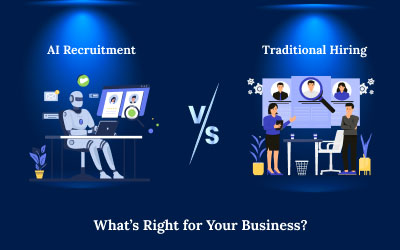
Discover Niyuk. Experience effortless screening and assessments. Book A Demo Every successful organisation’s backbone is a right recruitment. The recruitment process has been transforming a lot over some years, from conventional to now AI is taking over and playing a vital role in talent acquisition for businesses. As AI technology becoming more useful and spreading widely, Now, Hr recruiters and Hr managers have the choice to select between traditional recruitment process or AI-driven hiring process. Now we have, AI hiring software available with us. In this blog, we’ll dive deep into the differences between traditional(conventional) and AI recruitment, rolling out in detail, how AI is transforming the hiring process and helping mitigating challenges in talent acquisition. We will also highlight the prospective challenges AI brings, so you can make a data-driven decision about integrating these tools into your recruitment strategy. The Way Traditional Recruitment Process Works Manual vs Automated Hiring This is a pure manual recruitment process. It begins with job openings being advertised via many channels like job boards, social media, or word of mouth. After this, Recruiters can review resumes, shortlist candidates, and conduct interviews, all these steps are time-consuming and sometimes irregular. For recruitment agencies and HR department, this method relies mainly on human decision. While this enables for personal interactions and customised assessments, it also has its limitations in terms of speed, scalability, and objectivity. Challenges with Regular Recruitment Regular or traditional recruitment has been there for more period now as the go-to method, but it is having several pain points: Time-Saving: Manual screening more than thousands of resumes manually, conducting interviews, and performing admin tasks will make the recruitment process sluggish and non-effective. Subjectivity and Bias: Also, the most genuine recruiters may unintentionally allow unconscious bias to affect their hiring decisions. This will result in a lack of variety or unfair edge for some candidates. Limited Candidate Pool: Conventional methods mainly depend on job boards or individual networks, which normally limit the talent pool, specifically when looking for very niche or global candidates. Inconsistency: Each recruiter would assess resumes and conduct interviews separately, which leads to non-synchronisation in the recruitment process, making it complex to smart comparison of candidates. Redefining the Recruitment Journey in AI Way AI recruitment tools are completely changing over how talent is sourced, screened, and hired. By automating redundant tasks and enhancing decision-making processes, AI is resolving many issues that troubled in conventional methods. Niyuk is an AI-driven HR hiring platform designed to support recruiters make smart decisions in record time. Niyuk does the smart scanning of over 7 million profiles and match candidates to the right job based on their skills, experience, and personal choices. Here’s how Niyuk improves recruitment: Fast Candidate ShortlistingNiyuk helps you shortlist candidates in less than 24 seconds, saving your measurable time in the hiring process. AI Video InterviewsWith built-in AI video interview feature, Niyuk assures a simplified interview process which is rapid and more comfortable for both sides- recruiters as well as candidates. Multilingual CapabilitiesAvailable in more than 10 languages, Niyuk opens recruitment global level opportunities, assuring that talent can be resourced from anywhere, without any language barriers. Customizable Job DescriptionsNiyuk enables you to make individualised job descriptions, making sure about the right fit for every role.By using AI, Niyuk helps resolve the challenges those have conventionally slowed down the recruitment process, giving a fast, more efficient, and almost 0 biased approach to talent acquisition. Unlock efficiency with cutting-edge recruitment automation tools. See why AI hiring software comparison consistently points to AI’s advantages. Contact Us Challenges with AI in Recruitment Even though AI has many advantages, there are certain challenges to cope up with as follows: Over-Dependency on AlgorithmsOne of the risks of AI recruitment is that over-dependency on algorithms may lead to mechanical decision-making. While AI can identify patterns, it may ignore the human qualities that make candidates a suitable fir to the culture or may bring distinct strengths to a role. Human Factor in HiringAlso, AI tools can make hiring a lot simple, they just can’t put in the personal touch and the way relationships are built in traditional recruitment process.Some job aspirants would feel a bit put off by a process that feels too impersonal, or they might miss out on some valuable insights which only a recruiter can share during a real human conversation. Initial Cost to BearStarting with AI tools means investment in new technology and ensuring everyone knows the way to use it. For small companies or recruitment agencies, that initial cost can feel like a big block. Anyhow, when you look at the big picture, the long-term benefits – like closing roles faster and finding much better candidate matches – normally make that upfront investment worthy. Base of Good DataAI is only as smart as the data-based information it captures from. If the data it’s trained on is biased or incomplete, the AI tool might end up giving recommendations, that are either not correct or unfair. So, making sure that the data you feed into the AI is top-quality and diverse is required for really getting the best out of it in recruitment. Traditional Hiring vs AI Recruitment: A Comparison So, find below given quick comparison between traditional hiring and AI recruitment: Factor Traditional Hiring AI Recruitment Speed Slow, with manual steps and delays. Fast, screening automation and scheduling. Scalability Limits on how much a recruiter can handle. Scales easily, handles high volumes of candidates. Bias Can be influenced by unconscious biases. Reduces bias, works on data and skills. Personal Touch Develops strong relationships, entrust on fit. Less personal, but fast and more efficient. Cost Lower upfront cost, but labour more. Higher initial cost but saves time and money in long-term. Consistency Variable between recruiters, can be inconsistent. Regular, data-driven decisions. Efficiency Slow and admin-heavy, with high manual work. Simplified and automated, time saving. Both traditional or conventional recruitment and AI-powered recruitment have their doubtless existence in the hiring process. As AI delivers efficiency, speed,
10 Ways AI Hiring Platforms Help You Hire Top Talent Faster

Discover Niyuk. Experience effortless screening and assessments. Book A Demo Hiring the right and potential candidates has been never so easy till today. It is a time taking and complicated task to carry out as per the company or enterprise requirements. But here is the crux in 2025. Now, AI in Hr is no more a daydream. Thanks to AI technology. AI Hiring Platforms or AI recruiting software not only transformed but streamlined the entire HR hiring or recruitment process with exceptional time saving and human efforts always used to put in critical screening. This is simply redefining the entire recruitment process of hr with AI recruiter. In this blog article, we are going to discuss and roll down top 10 ways AI Hiring Platforms help you to hire top brains faster. This technological edge saves human efforts, hours of time as well as money. With the Niyuk.ai’s AI resume screening feature, you can minimise your applicant review time by 70%, thus speeding up your hiring process. Let us get some deep information and reveal them here to understand the power of AI hiring platform one by one: Use the power of an AI hiring platform to select the perfect candidates fast. Experience the best AI hiring solutions for a smarter workforce Contact Us 10 Best Ways of AI Hiring Platforms 1. Aligning Candidates with the Right (suitable) Jobs Manually, it’s very complicated task to match candidates with their relevant skill for the certain job. AI uses algorithms that connecting with candidates for respective, suitable job roles since skills, experiences and other criteria. This helps employers to get the right talent pool for those positions, whatever they are expecting. This also helps candidates to find their desired job profile. This is where an AI hiring platform comes into its own role, functioning as an incredibly useful AI recruitment tool. Think about it: instead of recruiters spending what feels like endless work hours poring over resumes and job descriptions, an AI recruiter can rapidly make sense of huge size of information. This efficient AI recruiting software is not only looking for some credit; it’s designed to know the details of a candidate’s experience and how that is aligned the major needs of a certain job. For example, if a company expect to streamline recruitment with AI, the platform can easily highlight people whose project work directly matches the expected skills, even if their right job title does not look like a right fit. This powerful AI for hiring means employers can get into the best AI hiring solutions to find qualified individuals. The result is better hires and less churn. It’s a fantastic outcome for everyone. Candidates are more likely to land jobs those truly aligning with their skills and passion, while companies use automated hiring software to safeguard top talent more effectively, making a potential difference in their AI in HR approaches. 2. AI Screening Ensures Inclusive Recruitment AI will evaluate resumes and applications with an initial filtering process and filter out the very promising candidates for their roles. This not only regulates the recruitment process drastically but carry out a genuine selection of candidates as it covers skills over qualifications over bigger elements those are not a priority. Also, it removes the stress on recruiters. 3. Integration of AI in Sourcing Tools With the help of AI, sourcing tools search across various platforms to identify candidates who are actively searching for a job or not, but having the right skills required. Companies get good benefits out if this. They find it easy to approach such candidates to offer them better job opportunities and engage them, for any upcoming role in the future. By collecting a candidate pool that has both active and passive candidates, it becomes an easy task to fill up any niche role and recruit the top-quality talent, whenever it is required. 4. Predict Future Workforce Needs through Data Analytics With AI, Businesses are well prepared for their current and future talent requirements because of the data insights generated with AI. Even recruiters are rest assured about the top talent needs, due to ready talent pools are available with the help of AI analytics. Due to predictive analytics, Various businesses can run their operations without any hassle and worry of shortage of the required manpower skills.AI takes care about all their recruitment worries. 5. Use of Chatbots for Fast and Suitable Automated Replies Chatbots plays a crucial role in AI hiring. Many times, during the recruitment process, human recruiters fail to follow the process or maintain the requirements clear and suitable for the business. Here comes the chatbot’s role to simplify the recruitment process, handling various candidates queries and maintaining the whole process. They not only address FAQs but also does tasks like scheduling candidate’s interviews as per both sides’ convenience. They smoothen many tedious small and big tasks for the recruiters. A best AI solution for recruitment today! 6. Video interview Assessments Driving Informed Decisions Video interview is the regular, routine activity today. Use of Ai in this is a cherry over the cream. AI helps recruiters to get or catch those human criteria’s which normally gets missed during the AI interviews. They are such as body posture, face expressions, tone and body language. AI observes these parameters and helps recruiters to assess them to take a data driven decision to hire the most suitable and prospective candidate- they are looking for. This helps in assessing some few job roles and not all. Also, human intervention and role is important in this. Entire AI process will not give any appropriate solution in each and every job profile. Tired of human recruitment hassles? Simplify recruitment with AI and transform your hiring efficiency. Book a Appointment 7. Onboarding Process Automation AI simplifies the entire boarding process. It is like providing and setting up the training for the new hires, guiding them about company culture, directing about company policies etc and setting up their workstations at the earliest. This